







The Primal Power of Crawling
Before we could walk, we crawled. This fundamental movement pattern is hardwired into our neurology, teaching our bodies how to coordinate opposite limbs, stabilise the torso, and build foundational strength from the ground up. As adults, we often lose
this integrated strength, leading to back pain, poor posture, and stiff hips. By reintroducing crawling into our fitness routines, we tap into a primal and highly effective way to re-engage these dormant pathways. It’s a full-body workout disguised as simple locomotion, demanding communication between your shoulders, hips, and the deep muscles of your core.
Why Crawling Forges a Rock-Solid Core
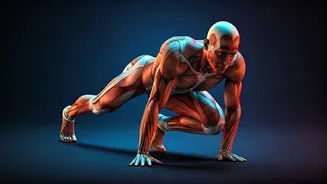
Crunches and sit-ups only train a small part of your abdomen. A truly strong core is one that can stabilise your spine against movement, a concept known as anti-rotation. This is where crawling excels. As you move an arm and the opposite leg forward, your deep core muscles—particularly the transverse abdominis and obliques—must fire intensely to prevent your torso from twisting and your hips from sagging. You’re essentially holding a moving plank. This constant, dynamic tension builds a resilient, functional core that protects your back and transfers power efficiently, whether you’re lifting groceries or playing a sport.
Your Foundational Crawl: The Bear Crawl
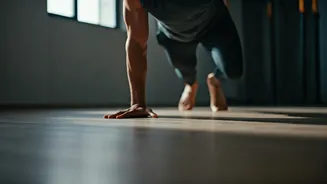
This is the cornerstone of any crawl routine. Mastering the form is crucial before you add speed or intensity. **How to do it:** 1. Start on all fours with your hands directly under your shoulders and your knees under your hips. 2. Lift your knees about an inch or two off the ground. Your shins should be parallel to the floor. Keep your back flat—imagine balancing a glass of water on it. 3. Begin crawling forward by moving your right hand and left foot forward simultaneously, just a few inches. 4. Follow with your left hand and right foot. 5. Focus on maintaining a tight core and a flat back throughout. Avoid letting your hips sway or rise too high. Move slowly and with control.
Increase the Challenge: The Leopard Crawl
Once you're comfortable with the Bear Crawl, the Leopard Crawl adds a new level of coordination and intensity by lowering your centre of gravity. **How to do it:** 1. Start in the same all-fours position as the Bear Crawl, but with a wider stance for your hands and feet. 2. Lower your hips and bend your elbows so you are much closer to the ground, like a predator stalking its prey. 3. Move your right hand and left foot forward, keeping your body low. The movement should be long and fluid. Your goal is to remain as close to the floor as possible without letting your belly or knees drag. 4. Alternate sides, feeling the deep engagement through your core, shoulders, and hips.
Structuring Your High-Intensity Workout
The “high intensity” part comes from how you structure these movements, not from doing them carelessly. You don’t need any equipment, just some floor space and a timer. Here’s a simple routine to get you started: **HIIT Protocol:** * **Warm-up:** 5 minutes of light cardio and dynamic stretches (arm circles, leg swings). * **Work Interval:** Perform a Bear Crawl for 10 metres, then turn around and crawl back. * **Rest:** Rest for 30 seconds. * **Work Interval:** Perform a Leopard Crawl for 10 metres, then crawl back. * **Rest:** Rest for 30 seconds. Repeat this cycle for 4-6 rounds. As you get fitter, you can increase the distance, decrease the rest time, or add more rounds. The key is to push yourself during the work intervals while maintaining perfect form. Listen to your body; the goal is fatigue, not injury.