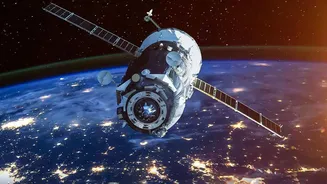







A Junkyard Orbiting at 28,000 Kmph
Imagine a cloud of millions of objects, from spent rocket stages to tiny paint flecks, circling the Earth at speeds of up to 28,000 kilometres per hour. This is the reality of space debris. At these incredible velocities, even a small fragment can strike
an operational satellite with catastrophic force, potentially destroying a multi-crore asset in an instant. Experts estimate there are over a million objects larger than one centimetre in orbit. This growing orbital clutter poses a significant threat to the satellite infrastructure that powers modern life, from GPS navigation and weather forecasting to banking and national security communications. For India, a major space-faring nation with a growing constellation of satellites, this risk is particularly acute. Most of India's operational satellites are in Low Earth Orbit (LEO), the most congested region of space.
The Old Way: A Manual Process
Traditionally, protecting satellites has been a manual and resource-intensive process. Ground stations operated by organisations like the Indian Space Research Organisation (ISRO) track known pieces of debris. When a potential collision is detected, teams of engineers must analyse the threat, calculate a new trajectory, and command the satellite to fire its thrusters to move out of the way. This process works, but it is slow and requires constant human oversight. In 2025, ISRO performed 20 such collision avoidance manoeuvres, and another nine have already been executed in 2026, highlighting the increasing frequency of these threats. As tens of thousands of new satellites are launched in the coming years, this manual approach is becoming unsustainable. The sheer volume of data and the small window of time to react to a threat necessitate a smarter, faster solution.
India’s AI-Powered Answer
This is where artificial intelligence comes in. Indian space-tech startups, in collaboration with ISRO, are at the forefront of developing automated systems to tackle this problem. Companies like Digantara are creating sophisticated AI algorithms that act as a form of space traffic management. These systems can process vast amounts of data from ground and space-based sensors in real-time. Instead of waiting for a command from Earth, a satellite equipped with this technology can autonomously detect a threat, calculate the most efficient evasive manoeuvre, and automatically fire its thrusters to reposition itself safely. This AI-driven approach is faster, more precise, and reduces the chance of human error. It allows a satellite to become a 'thinking' object, capable of protecting itself without constant ground control.
Protecting Critical National Infrastructure
The development of AI-powered thrusters is not just a technological feat; it is a crucial step in securing India's strategic autonomy. India's satellites are vital national assets. They form the backbone of the NavIC navigation system, provide critical Earth observation data for agriculture and disaster management, and enable communication networks across the country. Losing even one of these satellites to a debris collision would have significant economic and security repercussions. By automating satellite protection, India ensures the resilience and longevity of its space infrastructure. Furthermore, ISRO has initiated a 'Debris Free Space Mission' (DFSM) with the ambitious goal of achieving zero-debris missions by 2030, a commitment that involves both preventing new debris and managing existing risks.
The Future of a Sustainable Space
Beyond just avoidance, Indian startups are also pioneering active debris removal technologies. Companies like Cosmoserve Space are engineering robotic arms and capture mechanisms to grab and de-orbit existing space junk. These efforts, supported by agencies like IN-SPACe, are part of a broader vision for a sustainable future in space. As space becomes more commercialised and contested, the ability to operate safely and responsibly is paramount. By leading in the development of AI for space situational awareness and autonomous control, India is positioning itself not just as a launch leader, but as a key architect of future space governance. These technologies will be essential for ensuring that the final frontier remains open for exploration and utilisation for generations to come.