



India's Ambitious Journey to Venus
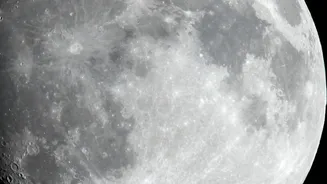
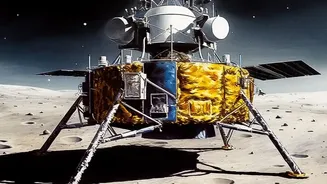
Following the monumental successes of its lunar (Chandrayaan) and Martian (Mangalyaan) missions, the Indian Space Research Organisation (ISRO) is setting its sights on the second planet from the sun: Venus. The planned Venus Orbiter Mission, unofficially
named Shukrayaan, represents India's first dedicated mission to our planetary neighbour. It is a major step forward, transitioning from technology demonstration to science-led interplanetary exploration. The goal is to study Venus from orbit for over four years, investigating everything from its surface geology to the complex dynamics of its atmosphere. This mission places India in a select group of space agencies aiming to unravel why Earth’s so-called twin evolved into such a dramatically different and inhospitable world.
The Challenge of the Sulphuric Veil
Understanding Venus is no simple task. The planet is encased in an opaque blanket of clouds composed mainly of sulphuric acid droplets. This cloud layer is so thick that it completely obscures the surface from view in visible light. Below this veil lies an extreme environment: surface temperatures hot enough to melt lead (around 467°C) and atmospheric pressure over 90 times that of Earth. These clouds are not just a visual barrier; they are a dynamic chemical factory that plays a crucial role in the planet's runaway greenhouse effect. To understand Venus, scientists must first understand the chemistry of these clouds. This is the primary challenge Shukrayaan's sensors are designed to tackle.
Decoding Light with Spectroscopy
The key technology ISRO will use to analyse Venus's clouds from orbit is spectroscopy. In simple terms, spectroscopy is the science of studying how light and matter interact. Every chemical element and compound absorbs, reflects, or emits light at a unique set of wavelengths, creating a distinct 'fingerprint' or 'signature'. Shukrayaan's orbiter will carry several instruments, known as spectrometers, designed to capture the light that has passed through or reflected off the Venusian atmosphere. By splitting this light into its component colours (or wavelengths) and analysing the resulting spectrum, scientists can identify the chemical signatures present. This allows them to determine precisely what gases make up the clouds, their temperature, and their density, all without ever touching them.
The VIRAL Instrument and Its Role
One of the key instruments for atmospheric study on Shukrayaan is VIRAL (Venus Infrared Atmospheric Gases Linker), a payload co-developed with Russian and French space agencies. VIRAL is a spectrometer that operates in the infrared range. It will use a technique called solar occultation. As the Shukrayaan orbiter moves, it will observe the sun's light as it passes through the edge of Venus's atmosphere. The gases in the atmosphere will absorb some of this light, leaving their chemical fingerprints for VIRAL to detect. This method is incredibly precise and will allow scientists to create vertical profiles of the atmosphere, measuring the concentration of gases like carbon dioxide, sulphur dioxide, and water vapour at different altitudes above the clouds. It's also designed to measure wind speeds by detecting the Doppler shift in the light signatures.
What ISRO Hopes to Discover
Through its suite of atmospheric sensors, ISRO's objectives for Shukrayaan are multifaceted. The primary goal is to create a comprehensive map of the structure, composition, and dynamics of the Venusian atmosphere. Scientists want to understand the mysterious 'super-rotation,' where the atmosphere circles the planet much faster than the planet itself rotates. The mission will also investigate solar wind interaction with the planet's ionosphere. Additionally, the orbiter's instruments will search for clues related to active volcanism by detecting gases like sulphur dioxide, which are released during eruptions. By providing a detailed chemical inventory of the clouds and the gases above them, Shukrayaan will offer critical data to help solve the puzzle of how Venus became a cautionary tale for planetary climate change, while also advancing India's own space exploration capabilities.