








Meet the Forward-Deployed Engineer
The term “Forward-Deployed Engineer” (FDE) might sound like it comes from a military briefing, and its origins are similar. Much like personnel stationed close to the action, FDEs are software engineers who embed directly within a customer's environment.
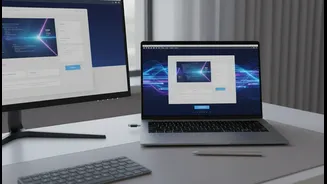
Their job isn't to build generic features from a distant headquarters; it's to solve the specific, messy, real-world problems that customers face. They work on-site, join the client's Slack channels, and get hands-on with their data and infrastructure. This role was pioneered by companies like Palantir and is now being widely adopted by major AI players like OpenAI and Anthropic. The reason is simple: even the most powerful AI model is useless if it doesn't integrate smoothly into a business's actual workflow. FDEs bridge this crucial “last mile” gap, combining deep technical skill with business acumen to ensure that technology delivers measurable results.
The Strategic Shift to Client-Side AI
While FDEs tackle integration challenges, another powerful trend is gaining momentum: client-side, or on-device, AI. For years, AI has been synonymous with the cloud; data is sent to a massive remote server, processed, and the result is sent back. Client-side AI flips this model. It performs AI computations directly on the user's device, whether that's a smartphone, laptop, or car. The advantages are significant. First and foremost is privacy. Since sensitive data never leaves the device, it's inherently more secure, a critical factor for healthcare, finance, and other regulated industries. Second is speed. With no network round-trip, the response is instantaneous, which is crucial for features like real-time camera effects or voice commands. Finally, it reduces costs for developers by offloading computation to the user's hardware and works even without an internet connection.
Where the Engineer Meets the Algorithm
This is where the two trends converge. Implementing effective client-side AI is a complex challenge. It’s not just about running a model on a phone; it's about optimizing that model for lower processing power, managing battery consumption, and ensuring it works flawlessly across a huge variety of devices. This is precisely the kind of granular, context-specific problem that Forward-Deployed Engineers are uniquely equipped to solve. An FDE working with a logistics company, for example, could help develop a client-side AI feature that allows delivery drivers to optimize routes in real-time, even in areas with poor connectivity. The engineer would be on the ground, understanding the drivers' real-world constraints and tailoring the on-device solution to meet those exact needs. They translate vague business problems into concrete technical plans, making the AI useful in practice, not just in theory.
Why This Matters for Indian Tech
For India's vibrant tech ecosystem, this dual shift presents a massive opportunity. As a hub for both software development and a massive, mobile-first consumer market, the demand for on-device intelligence is set to explode. Companies that master this will build faster, more private, and more resilient applications. The rise of the FDE signals a move away from just selling a product to selling a guaranteed outcome. Indian IT service giants and nimble startups alike can leverage this model to offer deeper, more integrated partnerships with clients globally. Furthermore, as the hardware in smartphones and other devices available in the Indian market becomes more powerful, the potential for sophisticated client-side AI applications grows. This creates a fertile ground for innovation in areas from fintech and e-commerce to agritech and healthcare, building solutions that are not only smart but also tailored to the unique connectivity and privacy needs of the Indian user.