




The Challenge of Finding Every Threat
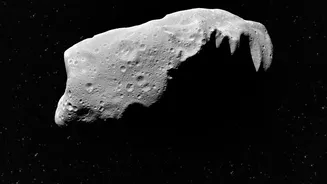
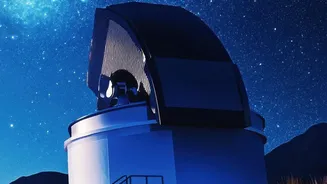
Humanity's ability to scan the cosmos is more advanced than ever. A global network of telescopes, including projects like the Catalina Sky Survey and Pan-STARRS, constantly searches for Near-Earth Objects (NEOs). These are asteroids and comets whose orbits
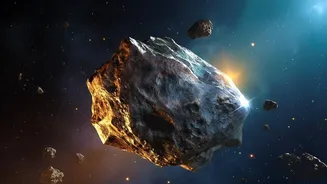
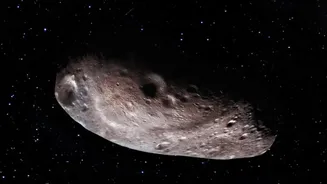
bring them close to our planet. To date, thousands of NEOs have been cataloged, including over 90% of the ones large enough to cause a global catastrophe (over 1 kilometre in diameter). However, the recent detection of asteroid 2026 RW1 just seven hours before it harmlessly burned up over the Indian Ocean is a stark reminder that our sky survey is not foolproof. The primary issue lies with smaller, but still potentially dangerous, objects. Experts estimate we have found less than half of the asteroids in the 140-meter range—large enough to devastate a region.
Hiding in the Sun's Glare and Darkness
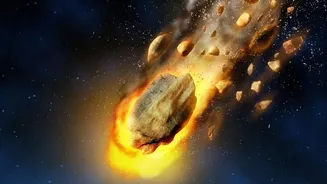
So why are we still being surprised? There are several reasons. Many asteroids are incredibly dark, reflecting very little light and making them difficult for ground-based optical telescopes to spot against the black of space. Another major challenge is the sun. Asteroids that approach Earth from the direction of the sun are effectively hidden in its glare, rendering ground-based telescopes blind. This was the case with the 20-meter Chelyabinsk meteor in 2013, which exploded over Russia with unexpected force, injuring over a thousand people. Furthermore, the sheer speed and unpredictable trajectories of some objects give us a very short window from detection to potential impact. Weather, daylight, and atmospheric interference also limit the effectiveness of our current ground-based observation network.
From Detection to Active Defence
Knowing a threat is coming is only half the battle. For decades, planetary defense was focused almost entirely on detection. But now, we are entering an era of active defense. The game-changer was NASA's Double Asteroid Redirection Test (DART) mission in 2022. The mission successfully slammed a spacecraft into the asteroid moonlet Dimorphos, altering its orbit. The impact changed Dimorphos's 11-hour and 55-minute orbit around its parent asteroid by 33 minutes, proving that humanity has the capability to change the path of a celestial body. The recoil from the tons of rock and dust ejected by the impact significantly amplified the push, giving scientists crucial data for future missions. This successful demonstration marks a watershed moment, confirming that a kinetic impactor is a viable strategy to deflect a hazardous asteroid, provided we have enough warning time.
The Next Generation of Planetary Protection
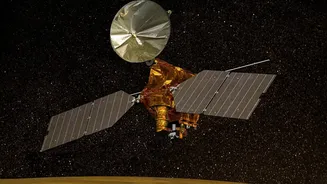
To close the gaps in our detection capabilities, NASA is developing the NEO Surveyor, a space-based infrared telescope. Scheduled to launch no earlier than September 2027, this mission is specifically designed to hunt for the asteroids our current systems miss. By operating in infrared, NEO Surveyor will detect the heat signature of asteroids, making it effective at finding dark objects and those that lurk in the sun's glare. Positioned at a stable point between the Earth and the sun, it will have a clear view of orbits inside our own. The goal for NEO Surveyor is to find at least two-thirds of the potentially hazardous objects larger than 140 meters within its first five years, drastically accelerating our ability to complete the congressional mandate of cataloging these threats.