



The Constant Threat Below
For generations, grape farmers in Nashik, the wine capital of India, have fought a ground war against fungal diseases like downy and powdery mildew. These microscopic enemies can devastate a vineyard with alarming speed, wiping out a significant portion
of the potential harvest and income. The traditional method of defence has always been manual scouting—walking through endless rows of vines, visually inspecting leaves for the first subtle signs of infection. This process is not only labour-intensive and time-consuming but also prone to human error. By the time symptoms are visible to the naked eye, the disease may have already spread, forcing farmers into a reactive cycle of widespread, expensive chemical spraying. This blanket approach often leads to wasted resources, increased costs, and a heavier environmental footprint.
An Eye in the Sky
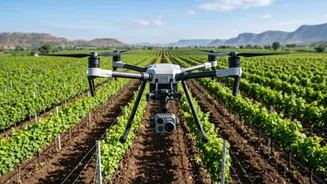
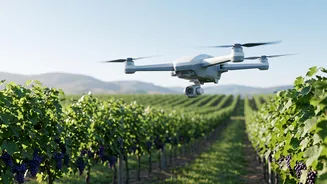
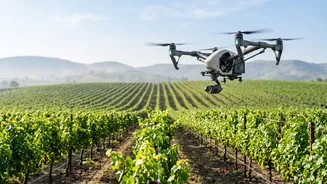
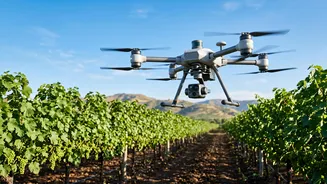
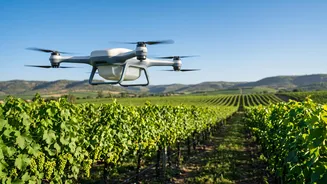
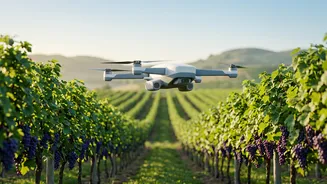
Enter the new age of digital viticulture, where the farmer's most valuable tool is an unmanned aerial vehicle (UAV), or drone. These drones are equipped with sophisticated multispectral and hyperspectral cameras that see what the human eye cannot. Flying in automated patterns over the vineyards, they capture high-resolution images of the crop canopy. These cameras measure how the grape leaves reflect and absorb different wavelengths of light. A healthy, thriving plant has a distinct light signature; a plant under stress from disease or nutrient deficiency has a different one, often detectable long before physical symptoms like spots or wilting appear. This 'bird's-eye view' provides a comprehensive and objective snapshot of the entire vineyard's health in a fraction of the time it would take to scout manually.
The AI's Diagnosis
Capturing the images is only half the battle. The real intelligence comes from the artificial intelligence (AI) that processes this vast amount of data. Onboard processors or cloud-based systems use machine learning algorithms, trained on thousands of images of both healthy and diseased plants, to analyze the aerial photos in real-time. The AI can pinpoint with remarkable accuracy the exact location of vines showing early signs of stress. It can differentiate between issues like water shortage, nutrient deficiency, and specific fungal infections, creating a detailed health map of the vineyard. This allows farmers to move from reactive guessing to data-driven, predictive management.
Precision, Not Pollution
Once the AI identifies a problem area, the response is swift and precise. Instead of spraying the entire vineyard, farmers can now practice 'precision agriculture'. The GPS coordinates of the stressed vines are used to guide targeted interventions. In many cases, a second drone equipped with a sprayer can be dispatched to apply fungicides or other treatments only to the affected plants. This surgical approach dramatically reduces the amount of chemicals used, sometimes by a significant margin. The benefits are threefold: it lowers the farmer's expenditure on expensive pesticides, minimises the environmental impact of chemical runoff, and ensures a healthier, better-quality grape. This targeted method helps maintain the delicate balance of the vineyard's ecosystem.
A More Bountiful Harvest
For the farmers of Nashik, this technology is more than just a novelty; it is a vital tool for economic stability. By catching diseases early, they can prevent widespread crop losses that could otherwise cripple their finances for the season. Lower input costs on water and chemicals mean better profit margins. Furthermore, the ability to monitor vine health so closely allows for better canopy management and yield estimation, helping farmers plan for harvest and negotiate better prices. This fusion of technology and tradition is not just saving grapes; it is securing livelihoods and positioning Indian agriculture on the cutting edge of global innovation.