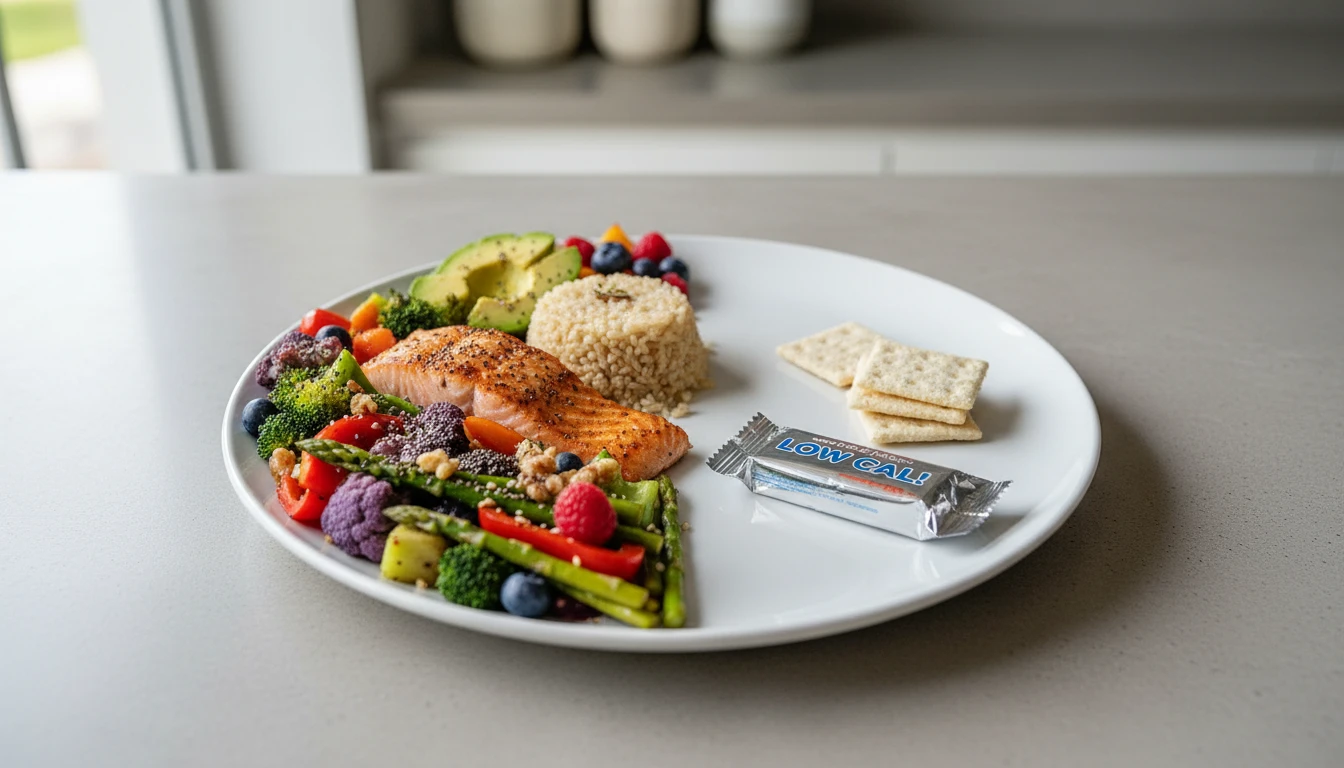







The Calorie-Counting Trap
A low-calorie plate is defined simply by the total energy it contains. The primary goal is usually weight loss, based on the principle of consuming fewer calories than your body burns. This can lead to choosing foods based on a single number, like a 100-calorie
snack pack or a diet soft drink. While this approach can lead to weight loss, it has significant pitfalls. Focusing only on calories ignores the nutritional quality of what you're eating. You might be cutting calories, but you could also be cutting out essential vitamins, minerals, and fibre, leading to nutrient deficiencies, fatigue, and even a slower metabolism over time.
So, What Is a Balanced Plate?
A balanced plate, on the other hand, is about nutritional quality and variety. It’s a framework for building meals that nourish your body with everything it needs to function optimally. The most common model suggests filling half your plate with non-starchy vegetables (like leafy greens, broccoli, and bell peppers), one-quarter with lean protein (such as dal, lentils, chicken, fish, or tofu), and the final quarter with complex carbohydrates or starches (like whole-wheat roti, brown rice, or millets). This approach ensures you get a healthy mix of macronutrients—carbohydrates for energy, protein for fullness and muscle repair, and healthy fats for hormone function—along with vital micronutrients like vitamins and minerals.
Quality Over Quantity: The Real Difference
Here's where the two concepts diverge sharply. A meal can be low in calories but completely unbalanced. Think of a small packet of biscuits and a cup of black coffee; it’s low in calories but provides virtually no lasting nutrients. Conversely, a balanced meal might be higher in calories but packed with health benefits. For example, a bowl of rajma with brown rice, a side of seasonal vegetables (sabzi), and a fresh salad is far more calorie-dense than the biscuits, but it provides sustained energy, fibre, protein, and a wide array of vitamins. Foods rich in nutrients promote greater satiety, meaning they keep you feeling full and satisfied for longer, which helps prevent overeating.
Why Balance Beats Low-Calorie for Long-Term Health
Prioritising a balanced plate over a strictly low-calorie one offers numerous advantages for your long-term health. It helps stabilise blood sugar levels, preventing the energy spikes and crashes that come from eating refined, low-nutrient foods. A nutrient-dense diet supports everything from your immune system and digestive health to your mental well-being. In contrast, an obsessive focus on calories can lead to a poor relationship with food and create stress around eating. By shifting your focus from restriction to nourishment, you build sustainable habits that support your body for life, not just for short-term weight loss.
Building Your Own Balanced Plate
Creating a balanced plate is simpler than you think and doesn't require rigid counting. Start by visually dividing your plate. Load up half with colourful vegetables—think spinach, carrots, cabbage, or gourds. For your protein quarter, choose from a variety of sources like different dals, chickpeas, paneer, eggs, or lean meats. For the carbohydrate quarter, opt for whole grains such as jowar or bajra rotis, quinoa, or unpolished rice. Don't forget healthy fats! A small amount of ghee, a sprinkle of nuts and seeds, or a slice of avocado can make your meal more satisfying and nutritious. Remember, this is a flexible guide, not a strict rule. The goal is to include variety and prioritise whole, minimally processed foods.