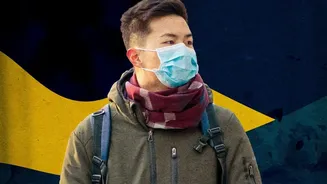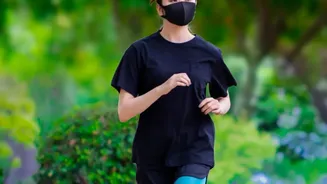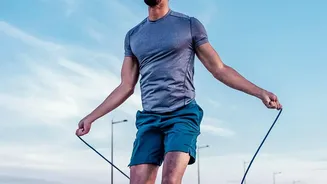





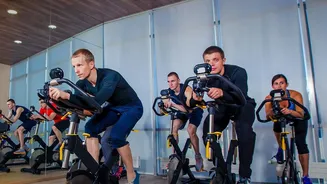

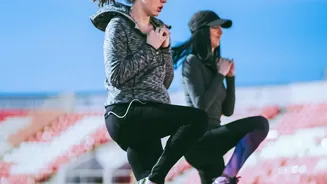
Exercising outdoors with a face mask has become a common sight, but it raises an important question: how does that filter affect your breathing during hard cardio? Understanding the science can help you stay safe and perform your best.
The Science of Breathing Under Strain
During strenuous
cardiovascular exercise like running or cycling, your body's demand for oxygen skyrockets. Your heart pumps faster and your breathing becomes deeper and more rapid to supply oxygen to your working muscles and clear out the carbon dioxide (CO2) they produce as waste. For healthy individuals, this gas exchange is a highly efficient process. However, adding a physical barrier in front of your mouth and nose, like a mask, can change the dynamics of breathing. The primary concerns often raised are whether masks trap CO2, leading to rebreathing, and if they significantly lower oxygen intake, a condition known as hypoxemia.
How Masks Change the Equation
Scientific studies show that for most healthy people, wearing a mask during exercise has a minimal effect on blood oxygen levels or CO2 in the blood. While there can be a tiny increase in breathing resistance and a small amount of CO2 rebreathing from the air trapped in the mask, the physiological effects are often too small to be detected by medical instruments. However, masks can significantly increase the perception of effort, a sensation known as dyspnea. This feeling of breathlessness is often due to the discomfort of re-inhaling warmer, humid air and the feeling of the mask on hot, sweaty skin, rather than a dangerous drop in oxygen.
Not All Masks Are Created Equal
The type of mask you wear makes a significant difference. High-filtration masks, such as N95 respirators, are designed to create a tight seal and filter very small particles. This also means they have higher breathing resistance, which can make high-intensity exercise feel much harder and may slightly impact gas exchange. Surgical masks are less restrictive but can become wet with sweat quickly, which makes them harder to breathe through and less effective. Cloth masks vary widely depending on their material and number of layers. A tightly woven, multi-layer cloth mask offers more protection but less breathability than a single-layer, synthetic one. Some brands now offer sports masks made of breathable, moisture-wicking synthetic fabrics designed to hold their shape and stay off your face while you breathe heavily.
Essential Precautions for Masked Workouts
To exercise safely and comfortably while wearing a mask, it's crucial to listen to your body and make smart adjustments. First, choose the right mask; look for breathable, structured options made for athletic activity. When you start, lower the intensity of your workout to give your body time to adapt. If you normally run for 30 minutes, perhaps start with 15–20 minutes at a slower pace. Pay close attention to warning signs like dizziness, lightheadedness, or extreme shortness of breath. If you feel unwell, stop, find a safe space away from others, and take off your mask. Finally, since you may sweat more due to the mask trapping heat, be sure to stay well hydrated.
Who Should Be Extra Cautious?
While exercising with a mask is generally safe for the healthy population, individuals with pre‐existing health conditions should take extra care. People with severe cardiopulmonary diseases, such as COPD, asthma, or certain heart conditions, may find that even a small increase in breathing resistance can significantly impact their exercise capacity and comfort. For these individuals, any discomfort or change in breathing could be a more serious concern. It is strongly recommended that anyone with an underlying health condition consult their doctor before starting or continuing an exercise routine that involves wearing a mask.