



The Crime of Passionate Overwatering
It’s a familiar story for many urban gardeners. You bring home a beautiful new plant for your balcony, determined to give it the best care. You water it diligently, checking the soil surface daily. But soon, the leaves turn yellow, the stems get mushy,
and the plant wilts. The culprit isn't neglect, but overzealous care. Overwatering is one of the most common and fatal mistakes in container gardening. Unlike plants in the ground, a pot has a finite space. Excess water pools at the bottom, suffocating the roots and leading to root rot, a condition from which few plants recover. Balconies, with their concrete floors and exposure to wind, can also mislead you; the topsoil may feel dry while the root zone below is saturated. This creates a perfect storm for well-intentioned plant parents to accidentally drown their green companions.
What Is an IoT Soil Sensor?
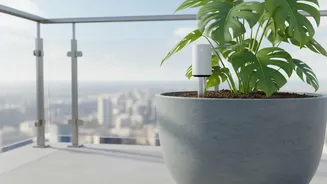
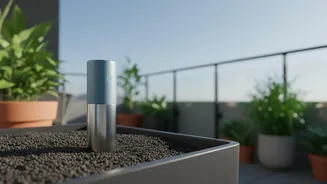
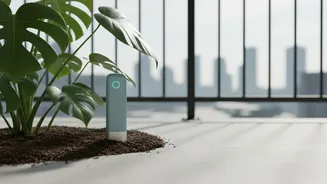
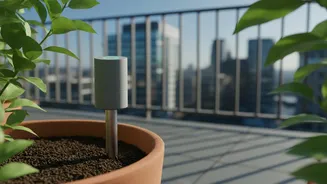
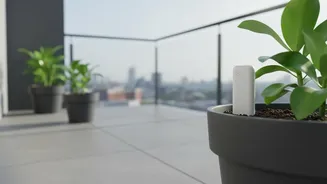
Enter the hero of our story: the Internet of Things (IoT) soil sensor. The term 'IoT' might sound complex, but the idea is simple. It refers to a physical device—in this case, a small probe you stick in your plant’s pot—that is embedded with sensors and connects to the internet or your phone to share data. Think of it as a smart translator for your plant. It 'listens' to the soil conditions and then tells you, in plain language via an app, exactly what your plant needs. These gadgets remove the biggest variable in plant care: guesswork. Instead of watering on a rigid schedule or relying on a finger test that only checks the surface, you get real-time, accurate data from where it matters most—the root zone.
How These Smart Gadgets Work Their Magic
Using a smart plant sensor is incredibly straightforward. You insert the probe into the soil next to your plant, and it immediately starts monitoring key conditions. The primary function is measuring soil moisture. Most consumer-grade sensors use capacitive technology, which gauges the water content in the soil with high accuracy. The sensor then sends this information, usually via Bluetooth or Wi-Fi, to a dedicated app on your smartphone. The app displays the moisture level, often as a percentage. Instead of wondering if it's time to water, you'll get a simple notification like “Soil is 15% - Water Now” or “Soil is 60% - Moisture is sufficient.” It turns plant care from a guessing game into a precise, data-driven activity.
More Than Just a Thirst Meter
While preventing overwatering is their main draw, many affordable IoT sensors offer a suite of other valuable insights. Top models also monitor the intensity of sunlight your plant is receiving, the ambient temperature, and even the level of nutrients or fertiliser in the soil (measured as electrical conductivity, or EC). This 4-in-1 functionality provides a complete picture of your plant's environment. For example, the app might tell you that your succulent is getting too little light in its current spot, or that your tomato plant needs a dose of fertiliser. This holistic data empowers you to make small adjustments that lead to significantly healthier and more resilient plants, going far beyond just a simple watering schedule.
Finding Your Digital Green Thumb
Just a few years ago, these sensors were niche gadgets, but now they are widely available and surprisingly affordable. Brands like Xiaomi and RainPoint offer popular models that deliver great value. When choosing a sensor, consider the connectivity. Bluetooth models are cost-effective and have long battery life, but require you to be within range (usually about 10-15 metres) to sync the data. Wi-Fi enabled sensors connect directly to your home network, allowing you to check on your plants from anywhere, which is perfect for when you're at work or on holiday. Most of these devices are powered by a simple coin-cell battery that can last for six months to a year. With prices for reliable sensors starting well under ₹2000, they represent a small investment for the peace of mind and gardening success they provide.