





The Heart of the Battery Problem
At the core of every lithium-ion battery, the kind that powers most electric vehicles today, is a component called an electrolyte. Think of it as a chemical courier service. It's a liquid substance that allows lithium ions to move between the battery's
positive and negative electrodes, a process that either stores or releases energy. The problem is that conventional electrolytes are typically made from organic carbonate solvents. These chemicals are highly effective at their job, but they have a major downside: they are extremely volatile and flammable. In the rare event of a battery being damaged, overheating, or short-circuiting, this flammable liquid can ignite, leading to a dangerous situation known as thermal runaway, which is difficult to extinguish.
A Solution from the Fields
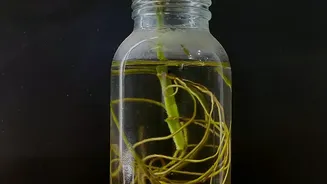
In the search for safer alternatives, scientists are now looking to an abundant and unlikely source: agricultural waste. Materials like corn cobs, coconut husks, wood byproducts, and even invasive weeds are being repurposed in the lab. The goal is to extract natural polymers—long-chain molecules like cellulose and lignin—to create new types of electrolytes. This approach offers a two-fold benefit. First, it utilises materials that would otherwise be discarded, contributing to a circular economy. Second, these plant-derived materials can form the basis of electrolytes that are inherently non-flammable, directly addressing the core safety issue of current battery technology.
From Waste to Wattage
The process involves transforming raw biomass into a usable chemical format. While specific methods vary, the general idea is to break down the plant matter to isolate desired molecules. For instance, cellulose can be processed to create gel polymer or solid-state electrolytes. Unlike the free-flowing liquid in conventional batteries, these bio-based electrolytes can have a more stable, semi-solid, or solid structure. This physical property alone makes them less prone to leaking and igniting if the battery casing is punctured. Researchers are exploring how to infuse these bio-polymers with salts that allow ions to move, effectively replacing the flammable organic solvents without sacrificing the battery's ability to charge and discharge.
The Non-Flammable Promise
The key safety advantage comes from the chemical stability of these plant-based materials. Many bio-polymers and ionic liquids derived from biomass have much higher flash points and thermal stability than their carbonate-based counterparts. This means they can withstand higher temperatures before breaking down or catching fire. Some research has shown that electrolytes developed from these materials simply won't ignite when exposed to a flame, a stark contrast to highly flammable conventional electrolytes. This intrinsic non-flammability could prevent a minor battery issue from escalating into a dangerous thermal runaway event, making future EVs significantly safer for drivers and first responders.
Beyond the Safety Boost
While enhanced safety is the primary driver, using agricultural waste offers other compelling advantages. Environmentally, it reduces reliance on fossil fuel-derived solvents and lessens the environmental burden of battery production. Economically, using waste as a raw material could potentially lower the cost of battery manufacturing in the long run, as it is an abundant and readily available resource. Furthermore, some research suggests that certain bio-based materials could even improve battery performance by preventing the formation of dendrites—tiny, spiky metal structures that can grow inside a battery and cause it to short-circuit and degrade over time.
The Road Ahead
Despite the immense promise, it's important to note that this technology is still largely in the research and development phase. Scientists are working to overcome several challenges. A major hurdle is achieving the same level of ionic conductivity as traditional electrolytes, which is crucial for fast charging and high performance. Ensuring these new electrolytes are compatible with existing high-energy electrode materials and can endure thousands of charge cycles is another key focus. Scaling up production from the lab to an industrial level will also require significant investment and engineering. While you won't find a biowaste-powered battery in an EV showroom tomorrow, the progress is a significant step toward a new generation of safer, more sustainable energy storage.