



Why Sitting Causes So Much Strain
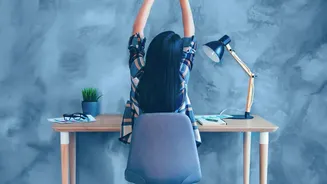
Our bodies are designed for movement. When you spend hours parked in a chair, several things happen. Your hip flexors, the muscles at the front of your hips, become short and tight. Your glutes, which should be among your strongest muscles, effectively
switch off. Meanwhile, you may start to hunch forward, causing your chest muscles to tighten and your upper back to become stiff and rounded. This combination of tight and inactive muscles creates a pattern of tension and weakness that often leads to chronic aches and poor posture. Over time, this can contribute to persistent discomfort in the neck, shoulders, and lower back, making the end of the workday feel like a physical chore.
The Power of Active Recovery
You might think the best antidote to a long day of sitting is to collapse on the sofa. This is known as passive recovery. A better approach is active recovery, which involves low-intensity movement to help your body heal and reset. Engaging in gentle activities increases blood flow to your muscles. This process helps deliver oxygen and nutrients while clearing out metabolic waste that can accumulate during periods of inactivity or stress. For desk workers, active recovery isn't about recovering from a workout; it's about recovering from the workday itself. Gentle movement tells your tight muscles to relax and your sleepy muscles to wake up, restoring balance and easing tension.
Getting Started with a Foam Roller
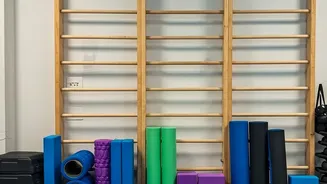
A foam roller is an inexpensive and effective tool for self-massage, also known as self-myofascial release. By applying pressure to specific muscle groups, you can help ease tightness and improve flexibility. For desk workers, a few key areas are particularly beneficial. Start with your upper back (thoracic spine) by lying with the roller placed horizontally under your shoulder blades. Gently roll up and down to massage the muscles that get tight from hunching. Next, target your glutes by sitting on the roller with one ankle crossed over the opposite knee, leaning into the hip of the crossed leg to find tight spots. Finally, address the hips by rolling the quadriceps and the muscles along the side of your hip. Spend about 30-60 seconds on each tender area, breathing deeply.
Essential Mobility Drills for Daily Relief
Mobility drills are active movements that take your joints and muscles through their full range of motion. Unlike static stretching, these exercises focus on improving movement quality. A simple routine can make a world of difference. Try the 'Cat-Cow' stretch on your hands and knees, alternating between arching your back toward the ceiling and dipping it toward the floor to mobilize your entire spine. Thoracic spine rotations, also done on all fours, involve reaching one arm up to the ceiling to open your chest and upper back. Finally, a kneeling hip flexor stretch is crucial. Kneel on one knee (use a cushion for comfort) and gently press your hips forward to feel a stretch in the front of the hip of the kneeling leg. These drills directly counteract the postures you hold all day.