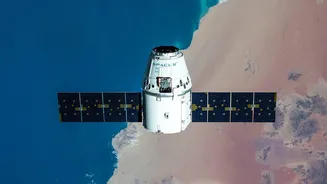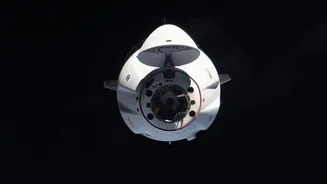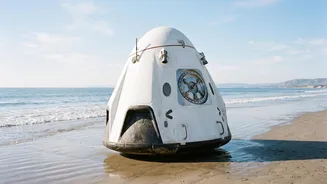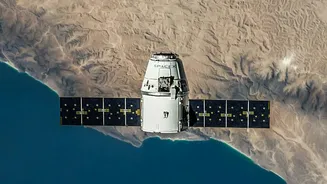




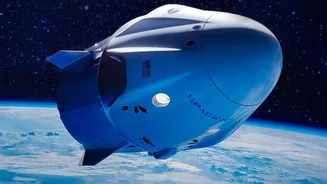
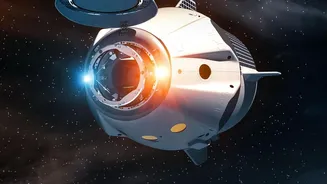
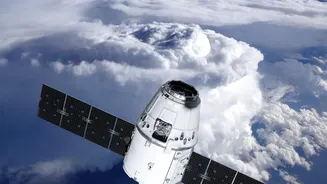
A crucial delivery has just arrived, not to a doorstep, but from orbit. A SpaceX Dragon capsule successfully splashed down off the coast of California, concluding its 35th resupply mission and bringing home a treasure trove of scientific hardware.
A Fiery Return With Precious Cargo
On November
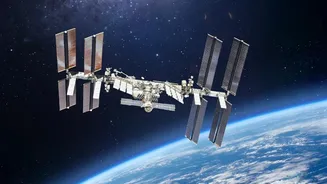
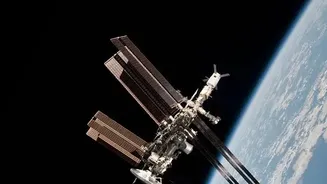
21, after undocking from the International Space Station (ISS) a day earlier, the unpiloted Dragon spacecraft endured a fiery plunge through Earth's atmosphere to parachute into the Pacific Ocean. This return journey is just as critical as the launch itself. While other cargo vehicles that service the station are designed to burn up on reentry, SpaceX's Dragon is uniquely capable of bringing significant amounts of material back to Earth intact. This capability transforms the ISS from a purely observational platform into a true off-world laboratory, one where experiments can be conducted and their results returned for in-depth analysis in advanced facilities on the ground.
From Microgravity to Medical Breakthroughs
The real value of the CRS-35 mission lies in the thousands of pounds of scientific cargo it carried. Among the most anticipated items are experiments with direct implications for human health. One key return was a 3D-bioprinted blood vessel construct. By studying how these tissues develop in microgravity—an environment that accelerates aging-like processes—researchers hope to gain new insights into cardiovascular disease. Another critical payload contained frozen tumor organoids. These are tiny, lab-grown models of cancerous tumors that were treated with experimental drugs while in orbit. Scientists will now analyze them to identify new ways to improve cancer therapies and push forward the field of personalized medicine.
Studying Threats and Improving Life in Space
Not all the science is focused on diseases. The capsule also returned frozen microbial samples gathered from the space station itself. This research is crucial for understanding how antibiotic-resistant bacteria survive, adapt, and evolve in the closed environment of space. The findings are vital for protecting the health of astronauts on long-duration missions to the Moon and Mars but also offer insights into combating 'superbugs' here on Earth. In addition to biological samples, the mission brought back a specialized lighting system that had been installed on the station for over three years. This hardware was part of a long-term study to test how different light spectrums can help regulate astronauts' sleep cycles and improve their well-being, a key factor for maintaining peak performance during demanding missions.
The Commercial Engine of Space Science
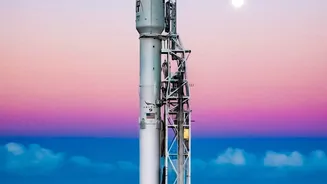
The CRS-35 mission, which began with a launch on October 13, is a prime example of the successful partnership between NASA and commercial companies like SpaceX. While delivering over 6,300 pounds of supplies and new solar arrays to the ISS, SpaceX's role as a reliable space courier is what enables this continuous cycle of research. This model allows NASA to focus on the science and exploration goals while leveraging the innovation and efficiency of the private sector for routine transportation to low-Earth orbit. It's a system that not only keeps the space station crewed and supplied but also accelerates the pace of scientific discovery by ensuring a steady flow of experiments to and from the orbiting laboratory.