







Making Sense of the Data Deluge
Climate science runs on data. Petabytes of it. Traditional methods involve creating complex physical models that require immense computational power from supercomputers, often taking weeks to run a single simulation. This makes it difficult to explore
multiple scenarios or get rapid forecasts. Artificial intelligence, particularly machine learning, is changing the game by its ability to process vast datasets and identify patterns that might be invisible to human analysts. Instead of just relying on the laws of physics, AI models are trained on decades of historical weather and climate data, learning the intricate relationships between different variables. This allows them to generate predictions and simulations at a fraction of the time and computational cost.
Sharper Forecasts for Extreme Weather
One of the most immediate impacts of AI is in forecasting extreme weather. As climate change increases the frequency and intensity of events like heatwaves, floods, and hurricanes, early warnings become more critical. AI-powered models can now produce forecasts that are not only faster but also more accurate. For instance, researchers have developed AI frameworks that can predict rare but catastrophic weather events from six hours to 14 days in the future with remarkable precision. Google's AI models have been used in partnership with India's Central Water Commission to develop flood forecasting systems that send mobile alerts to people in harm's way. This combination of speed and accuracy gives communities and emergency services crucial extra time to prepare, potentially saving lives and resources.
Pinpointing Pollution and Improving Models
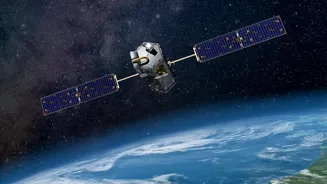
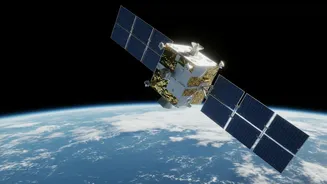
Beyond prediction, AI is also a powerful monitoring tool. It can analyze satellite imagery to automatically detect and quantify greenhouse gas emissions from specific sources. A recent UN report highlighted how AI-assisted workflows have become instrumental in identifying major methane leaks from the oil and gas sector. By automatically sifting through mountains of satellite data, AI helps human analysts process 12 to 15 times more information, turning raw data into actionable alerts to stop potent emissions. Furthermore, AI is being used to improve the climate models themselves. By blending AI's data-driven approach with traditional physics-based simulations, scientists are creating hybrid models that are both faster and more reliable. This allows for more robust long-term climate projections, which are essential for informing global policy decisions.
The Road Ahead: Promise and Problems
Despite its immense potential, AI is not a silver bullet. One significant challenge is that AI models can sometimes struggle to predict record-breaking events that fall outside the patterns of their training data. Some researchers have noted that traditional physics-based models can still outperform AI in these unprecedented scenarios. There is also the 'sustainability paradox': the large data centres required to train and run complex AI systems consume enormous amounts of energy and water, contributing to the very problem they are trying to solve. Ensuring that the data used to train these models is free of biases and that the technology is accessible to researchers globally, not just in the Global North, are other critical hurdles to overcome. The goal is to create AI that is not only powerful but also transparent and ethical in its application to climate science.