



The Serving Size Deception
Anyone who has tried to eat healthy knows the routine. You pick up a package, scan the front for promising words like “low fat” or “high fibre,” and then flip it over to the nutrition label, where confidence often turns into confusion. The single most
common source of this confusion is the “serving size.” While FSSAI regulations require food companies to list nutritional information, the manufacturers themselves often get to define what a serving is. This leads to what can only be described as deceptive mathematics. A small bag of chips you might finish in one sitting could be listed as containing 2.5 servings, making the calorie and fat numbers per serving seem deceptively low. A pack of biscuits might list values for a serving of just two biscuits, a portion few people stick to. This practice makes it nearly impossible for a shopper to quickly assess the true nutritional cost of what they are about to eat.
The Great Equalizer: ‘Per 100g’
This is where the “per 100g” metric becomes the consumer’s most powerful tool. It is the great equalizer in the supermarket aisle. By standardizing the measurement, it allows for a true, apples-to-apples comparison between two different products, regardless of the manufacturer’s imagined serving size. Are you choosing between two brands of breakfast cereal? Forget the per-serving stats. Looking at the sugar and sodium content per 100g on both boxes is the only way to know which one is genuinely the healthier option. This simple standard cuts through marketing jargon and portion-size trickery, providing a baseline truth for comparison. It transforms the label from a tool of potential confusion into a source of genuine information, which is its entire purpose.
Why We Need Both Numbers, Not Just One
While the per-100g value is essential for comparison, the per-serving information is not useless; it just needs to be honest. The ideal food label, the kind that truly empowers consumers, must feature both. This dual-column approach offers the best of both worlds. The 'per 100g' data allows for informed comparison while shopping, and the 'per serving' data helps you understand the impact of the portion you are likely to eat at home. International best practices support this hybrid model. It acknowledges the reality of how people consume food while providing the standardized data needed to compare products effectively. Forcing a choice between one or the other is a false dilemma; the strongest system is one that demands both.
The Urgent Indian Context
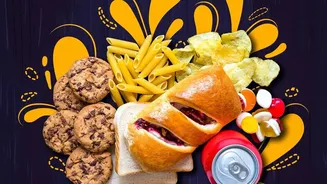
This isn’t just an academic debate. In India, the stakes are incredibly high. The consumption of ultra-processed packaged foods is rising, and with it, the rates of obesity and non-communicable diseases like diabetes and heart disease. For years, discussions have been ongoing about implementing a clear Front-of-Pack Labelling (FOPL) system—be it a Health Star Rating, traffic-light indicators, or direct warning labels. A parliamentary panel recently urged the FSSAI to finalize these long-delayed rules, which were first drafted in 2022. As regulators move forward, it is vital that this core principle is not forgotten. Any new FOPL system, no matter its design, will be fundamentally flawed if it is not based on clear, honest, and dual-format nutritional information.
A Fundamental Right to Clarity
Ultimately, clear food labelling is a fundamental consumer right. It is about providing people with the information they need to protect their health and the health of their families. The current system, with its non-compliant health claims and misleading serving sizes, often fails this basic test. As we design the next generation of food labels, the goal must be maximum clarity and minimum confusion. We need a system that serves the public interest, not just the marketing interests of food companies. The most direct path to achieving this is to keep the comparison framework simple, honest, and focused on what works: a prominent display of both the per-serving values for realistic portions and the per-100g values for easy comparison.