


The Problem with Pushing Too Hard
In our culture of quick results, it's tempting to believe that flexibility can be forced. Many beginners approach stretching with a 'no pain, no gain' mentality, trying to push their bodies into deep postures they aren't ready for. However, this approach is often
counterproductive and can be dangerous. Forcing a stretch beyond your comfortable limit can lead to micro-tears in muscle fibers, inflammation, and even joint instability. Ligaments, which stabilize joints, are not designed to be stretched repeatedly and can become loose, increasing the risk of future injuries. Signs of overstretching include sharp pain, muscle spasms, and weakness. The safest and most effective path to flexibility isn't about enduring pain, but about gentle persuasion and consistency.
Consistency Trumps Intensity
The key to safely increasing flexibility lies in consistent, gentle practice rather than infrequent, intense sessions. When you perform simple asanas daily, you encourage your muscles and connective tissues to lengthen and relax gradually. This slow, steady approach enhances range of motion and improves blood flow without shocking the system. Daily practice helps retrain your nervous system, teaching it to allow deeper stretches over time. Think of it as a conversation with your body, not a command. A short, 15-minute daily routine can yield far greater and safer results than a punishing two-hour session once a week. This method respects the body's natural pace, fostering long-term mobility and reducing the risk of chronic stiffness or injury.
Four Foundational Asanas for Daily Practice
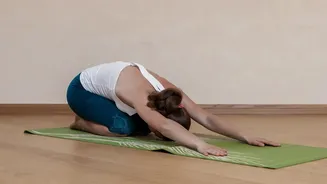
You don't need to contort yourself into a pretzel to become more flexible. Starting with a few simple, foundational poses is the most effective strategy for beginners. Focus on how the stretch feels, not how it looks. 1. Cat-Cow Pose (Marjaryasana-Bitilasana): This gentle, flowing movement is perfect for warming up the spine and relieving tension in the back and neck. It encourages flexibility along the entire spinal column and is an excellent starting point for any practice. 2. Downward-Facing Dog (Adho Mukha Svanasana): While it can feel challenging at first, Downward-Facing Dog is a full-body stretch that targets the hamstrings, calves, shoulders, and spine all at once. Beginners can bend their knees generously to protect the lower back. 3. Child's Pose (Balasana): This is a resting posture that offers a gentle stretch for the hips, thighs, and lower back. It's a wonderful pose to return to at any point during your practice to reconnect with your breath and release tension. 4. Seated Forward Bend (Paschimottanasana): This pose is a classic hamstring stretch. Beginners should sit on a folded blanket to tilt the pelvis forward and keep the knees slightly bent, focusing on lengthening the spine rather than touching their toes.
The Golden Rule: Listen to Your Body
The single most important principle in a safe yoga practice is to listen to your body's signals. A stretch should create a mild pulling sensation, but it should never be painful. Pain is your body’s signal to ease off. If you feel a sharp, stabbing, or burning sensation, you have gone too far. Always link your movement with your breath; slow, deep breathing helps calm the nervous system and allows muscles to release more effectively. Don't worry about what others can do or what you see on social media. Flexibility is a personal journey. The goal is not to achieve a specific shape, but to improve your own range of motion safely and mindfully, day by day.