




A New Era for Cosmic Data
Space exploration is all about data. From high-resolution images of distant planets to the telemetry that keeps a spacecraft healthy, missions generate enormous amounts of information. The bottleneck has always been getting that data back to Earth. Traditional
radio frequency (RF) systems, the workhorse of space communication since the 1950s, have struggled to keep pace. Sending a single, detailed image from Mars can take hours, and a full map of the planet could take weeks. But that's beginning to change thanks to laser, or optical, communications. NASA's Deep Space Optical Communications (DSOC) experiment is proving that infrared lasers can transmit data at rates 10 to 100 times greater than the best RF systems.
How Laser Communications Work
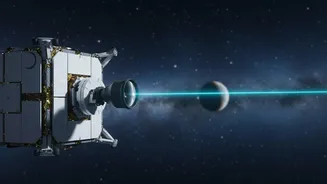
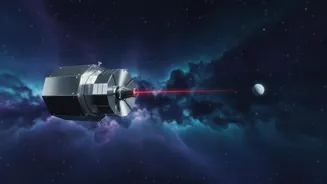
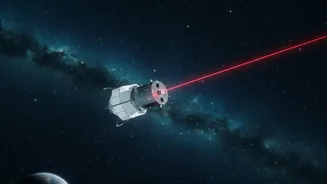
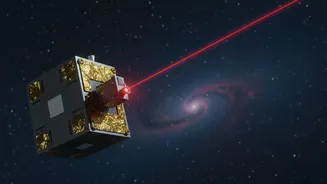
The concept is straightforward: instead of using radio waves to carry information, DSOC uses a beam of near-infrared light. Both travel at the speed of light, but infrared light has a much higher frequency. This allows engineers to pack significantly more data into each transmission. Think of it as the difference between AM radio and 5G cellular data. The laser beam is also much narrower and more focused than a radio signal. This concentration of energy means more data reaches the target receiver on Earth, but it also requires incredibly precise pointing. The DSOC system must aim a laser from millions of kilometres away and hit a target on Earth with pinpoint accuracy.
The Psyche Mission's Historic Test
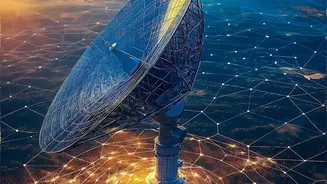
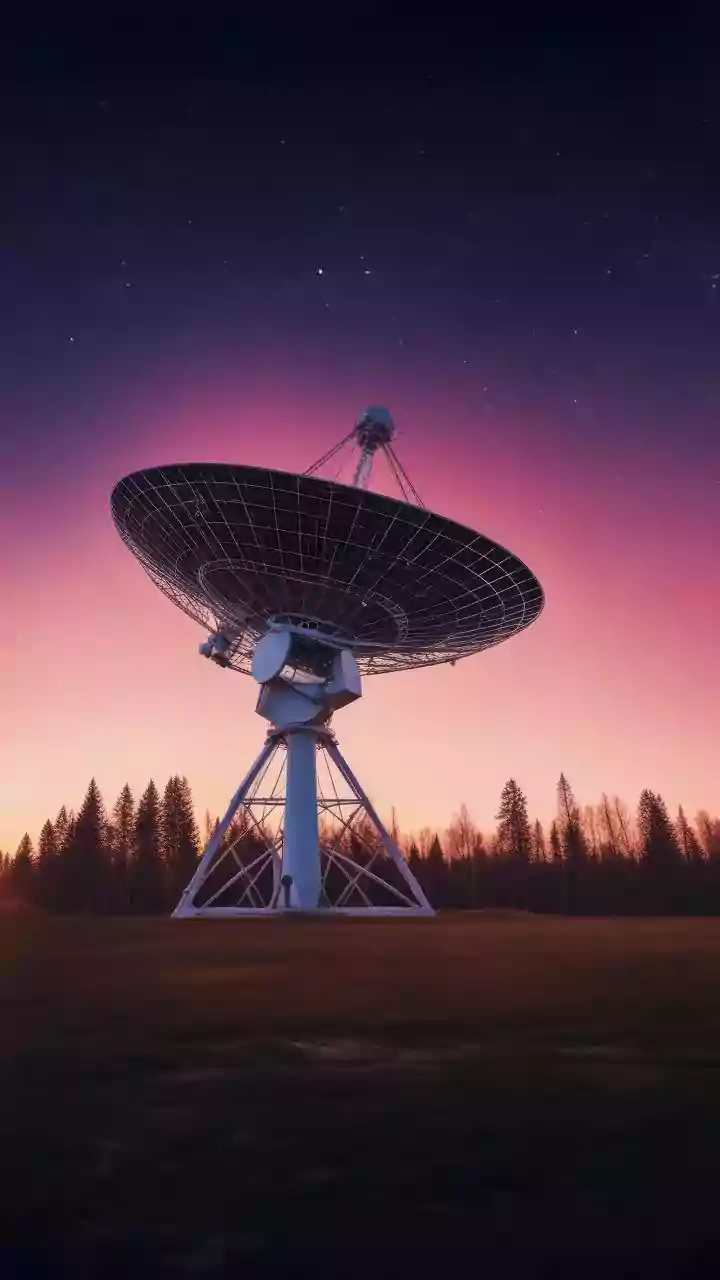
The DSOC technology is being tested aboard the Psyche spacecraft, which launched in October 2023 on a journey to a unique metal-rich asteroid between Mars and Jupiter. While Psyche has a standard radio system for its primary mission, it’s also carrying the DSOC transceiver as a technology demonstration. In December 2023, the system made history by beaming a 15-second, ultra-high-definition video of a cat named Taters to Earth from a distance of 31 million kilometres. The transmission achieved a maximum speed of 267 megabits per second (Mbps)—a rate comparable to a terrestrial broadband connection. The video signal took 101 seconds to travel from the spacecraft to the Hale Telescope at Caltech's Palomar Observatory in California.
Outpacing Traditional Radio Waves
The success of DSOC highlights the limitations of radio technology. For example, the Mars Reconnaissance Orbiter, a powerful science satellite, has a maximum data rate of about 5.2 Mbps and requires over an hour and a half to send a single high-resolution image. By contrast, even as the Psyche spacecraft travelled much farther out—to a distance of 226 million kilometres—the DSOC system was still able to transmit data at a rate of 25 Mbps in an April 2024 test. More recently, in June 2024, from 390 million kilometres away, it maintained a downlink rate far higher than a comparable radio system could achieve. This demonstrates a massive leap in capability that will redefine how we conduct science in deep space.
What This Means for Mars and Beyond
The implications of this technology are immense. Faster, higher-bandwidth communication is essential for future human missions to Mars, which will require streaming high-definition video, conducting real-time video calls, and transmitting massive scientific datasets. Robotic missions will also see a revolution, as instruments that were once considered too data-intensive to be practical can now be developed. Scientists could increase their data return by a factor of ten or more, leading to more discoveries. Furthermore, laser communication systems offer benefits in size, weight, and power, which are all critical resources on a spacecraft. Lighter and more efficient communication hardware means more room and power for the science instruments that actually do the exploring.