


First, A Quick Name Game
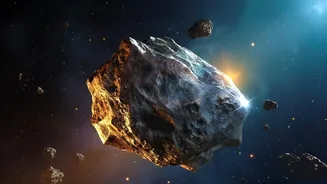
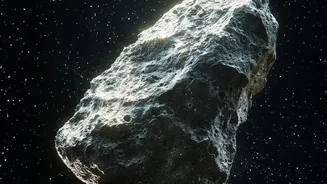
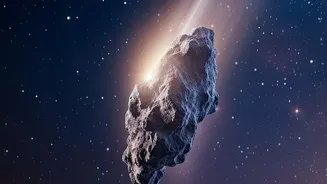
Before diving into the mystery, let's get the names straight, because in space, location is everything. While a rock is still floating through the vacuum of space, it’s called a meteoroid. These can range in size from a grain of sand to a small asteroid.
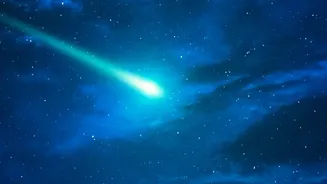
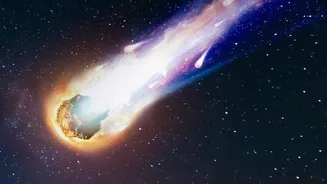
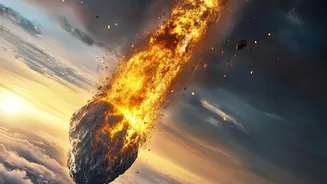
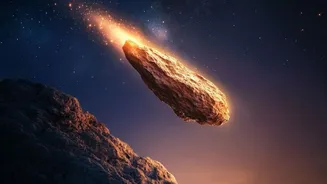
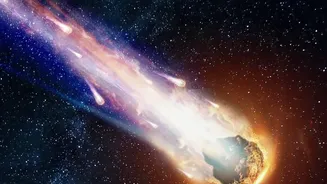
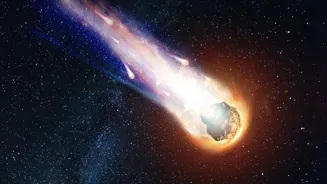
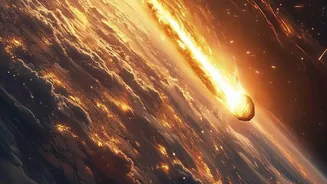
When one of these meteoroids enters Earth’s atmosphere and burns up, the streak of light it creates is called a meteor. Most burn up completely, but if a piece survives the fiery descent and hits the ground, it earns the name meteorite. That surviving fragment is what scientists can hold, study, and use to unlock secrets of the cosmos.
Cosmic Crumbs from the Asteroid Belt
So, where do these space rocks originate? The vast majority are fragments of asteroids. Most come from the asteroid belt, a massive ring of cosmic rubble orbiting the Sun between Mars and Jupiter. For millions, sometimes billions, of years, these asteroids have been colliding, shattering, and sending smaller pieces—meteoroids—careening through the solar system. The gravity of planets, especially the giant Jupiter, can perturb their orbits, eventually sending some on a collision course with Earth. These meteorites are essentially broken pieces of the original building blocks of planets.
Messengers from Other Worlds
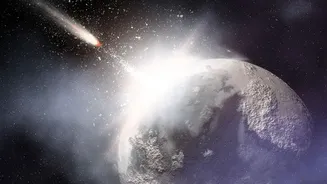
While the asteroid belt is the primary source, it's not the only one. A small but fascinating number of meteorites are pieces of other planets and moons. When a large asteroid or comet slams into a body like Mars or our Moon, the impact can be so powerful that it blasts surface rock into space. After drifting for potentially millions of years, a tiny fraction of this debris lands on Earth. Scientists can confirm a meteorite’s Martian origin by analysing pockets of gas trapped inside the rock; these gases perfectly match the atmospheric composition of Mars measured by landers like the Viking probes. Similarly, lunar meteorites are matched to the rock samples brought back by Apollo astronauts.
The Science of the Streak
The investigation often begins long before a meteorite is in hand. As a meteor blazes through the atmosphere, scientists use a technique called spectroscopy. By breaking down the light from the fiery streak into its component colours, researchers can identify the chemical elements burning up, creating a 'chemical fingerprint'. This tells them if the object is rich in iron, silicates, or other materials, offering the first clues to its composition. This remote analysis is crucial, as it helps connect what we see in the sky to the different classes of asteroids observed by telescopes.
Reading the Rocks
Once a meteorite is recovered, the real lab work begins. Scientists slice off thin, polished sections to study under powerful microscopes. They look for distinctive features like a blackened 'fusion crust' from its atmospheric entry or the presence of small, round grains called chondrules, which are some of the first solids to have formed in the early solar system. Techniques like mass spectroscopy help determine the rock's precise age by measuring the decay of radioactive isotopes. This is how scientists determined the age of our solar system to be a staggering 4.568 billion years, based on the age of the oldest known solids found in certain meteorites.
Unlocking Solar System History
Each meteorite is a time capsule. Primitive meteorites, which have remained largely unchanged since their formation, provide a snapshot of the raw materials that built our solar system. By studying their isotopic composition, scientists have identified two main families of meteorites—one from the inner solar system and one from the outer—helping to reconstruct how planets formed. Some meteorites even contain microscopic grains of 'stardust'—particles that are older than our Sun, originating from long-dead stars. These tiny grains provide invaluable information about the galaxy that existed before our own solar system was born.