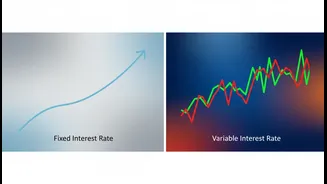










Fixed vs. Floating Rates: The Core Decision
The first major choice you'll face is between a fixed and a floating interest rate. A fixed interest rate remains the same throughout your entire loan tenure. This offers predictability; your Equated Monthly Instalment (EMI) will never change, making
it easier to budget. However, fixed rates are often initially higher than floating rates because the lender absorbs the risk of future rate increases. In contrast, a floating (or variable) interest rate changes based on market conditions. In India, these are often linked to an external benchmark like the Reserve Bank of India's (RBI) repo rate. If the benchmark rate drops, your interest rate and EMI could decrease, but if it rises, your payments will go up. The majority of education loans offered in India have floating interest rates.
When a Fixed Rate Loan is the Safer Bet
Opting for a fixed-rate loan is a prudent strategy for those who are risk-averse or have a tight, predictable budget. If the thought of your monthly payments increasing causes you stress, the stability of a fixed rate is worth the potentially higher initial cost. This is particularly true for students with long loan tenures—for example, 10 to 15 years. Over such a long period, the likelihood of rate fluctuations is high, and locking in a rate provides long-term security. If current interest rates are perceived to be low and are expected to rise in the coming years, securing a fixed rate can protect you from future increases and save you a significant amount of money over the life of the loan.
The Strategic Case for a Floating Rate
A floating rate loan can be a strategic choice if you have a higher tolerance for risk and a flexible financial situation. The primary advantage is that floating rates typically start lower than fixed rates, resulting in smaller initial EMIs. If you believe that interest rates are currently high and likely to fall, a floating rate allows you to benefit from that downward trend. This option is also often suitable for borrowers with shorter loan tenures, as there is less time for rates to fluctuate dramatically. Furthermore, if you have the financial capacity to make prepayments or handle a potential increase in your EMIs without significant strain, the initial savings from a lower rate might make the risk worthwhile.
Secured vs. Unsecured: The Collateral Factor
Beyond the interest rate type, you must also consider whether to take a secured or unsecured loan. A secured loan requires you to pledge collateral, such as property or a fixed deposit. Because this reduces the lender's risk, secured loans almost always come with lower interest rates, whether fixed or floating. This can be a major advantage, as even a small difference in the rate can lead to substantial savings over time. Unsecured loans do not require any collateral, making them more accessible for students whose families may not own significant assets. However, this convenience comes at a cost: interest rates for unsecured loans are consistently higher to compensate the lender for the increased risk.
Your Pre-Loan Checklist
Before signing any loan agreement, ask yourself these critical questions: What is my personal risk tolerance for fluctuating payments? What is the total tenure of the loan? A longer tenure increases the risk of rate changes. What is the current interest rate environment and its future outlook? Are rates high and expected to fall, or low and expected to rise? Do I have valuable collateral to pledge for a secured loan to get a lower rate? Can my budget accommodate a 1-2% increase in my interest rate without causing financial distress? Have I compared offers from multiple lenders, including public banks, private banks, and NBFCs, to find the best overall deal, considering not just the rate but also processing fees and other terms?