







A Breakthrough from the Lab
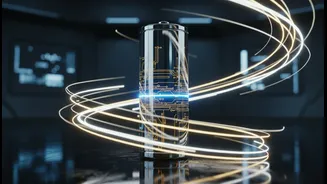
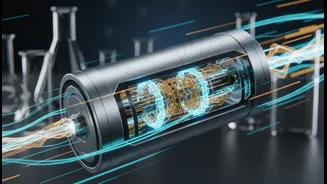
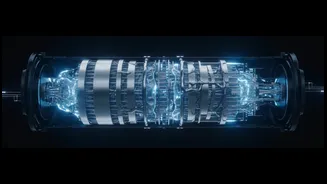
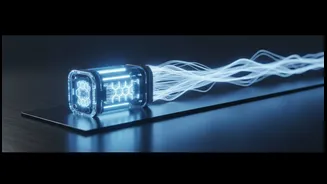
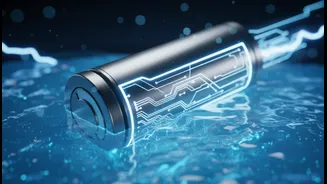
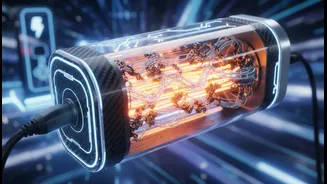
Researchers in China have announced a significant development in battery technology with a new sodium-metal battery (SMB). In a controlled laboratory setting, a small, experimental cell was charged at a rate that would equate to a full charge in roughly
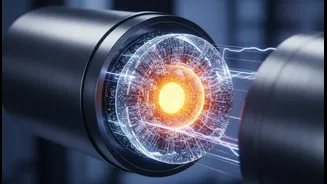
four minutes. This impressive feat was achieved using a novel quasi-solid gel electrolyte, which addresses one of the key challenges for this type of battery. This gel helps sodium ions move more evenly and prevents the formation of sharp, metallic growths called dendrites, which can cause short circuits and battery failure.
Why Sodium is a Big Deal
For decades, lithium-ion has been the undisputed king of batteries, powering everything from our phones to our cars. But lithium has its drawbacks: it's relatively scarce, its price can be volatile, and it's geographically concentrated in a few regions. Sodium, on the other hand, is one of the most abundant elements on Earth, easily sourced from salt. This makes it a potentially cheaper and more sustainable alternative. A successful sodium-based battery could reduce our reliance on critical minerals like lithium and cobalt, creating more resilient supply chains and potentially lowering the cost of EVs and large-scale energy storage.
The Four-Minute Reality Check
Here's the crucial context that readers need. The four-minute charge was achieved on a small, experimental coin-cell, not a full-size EV battery pack. When the researchers built a larger prototype pouch cell—closer to what's used in real products—it did not match the headline-grabbing speed or lifespan. Furthermore, the most impressive durability results, where a cell retained 90% of its capacity after 2,000 cycles, were recorded at a slower 20-minute charge rate. It is important to note that the experiments did not demonstrate one single battery combining a four-minute charge, a 2,000-cycle life, and high capacity all at once.
The Long Road from Lab to EV
Bringing a new battery from a laboratory discovery to a commercial product is a long and challenging journey. The primary hurdles for sodium-metal batteries include safety, scalability, and cost-effective manufacturing. The highly reactive nature of sodium metal requires stringent, moisture-free environments during production, which can increase complexity and cost. While the new gel electrolyte shows promise in preventing dendrites, ensuring this safety feature works flawlessly in millions of mass-produced batteries under real-world conditions—with all the bumps, temperature swings, and vibrations that entails—is a massive engineering challenge. The next big milestone will be to create a large pouch cell that can charge quickly and last for hundreds of cycles without degrading.
What This Means for India
For India, which is aggressively pursuing EV adoption and wrestling with charging infrastructure challenges, this line of research is particularly promising. A low-cost, fast-charging battery technology built on an abundant resource like sodium could be a game-changer. It could make EVs more affordable for a wider audience and ease range anxiety. Furthermore, as India expands its renewable energy capacity, cheap and reliable sodium-ion batteries could be vital for grid-scale energy storage, helping to store solar power generated during the day for use during evening peak hours. While this specific four-minute battery isn't ready for rollout, the continuous innovation in the sodium battery space signals a hopeful future.