

The Ritual and the Leaf
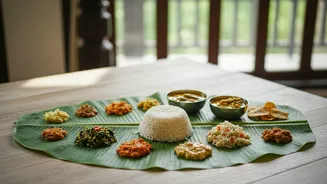
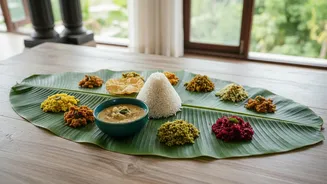
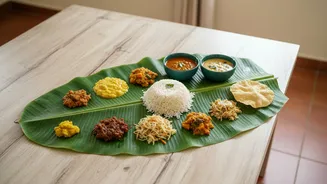
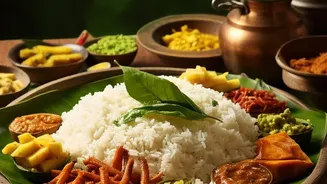
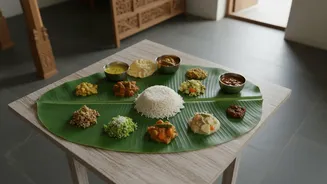
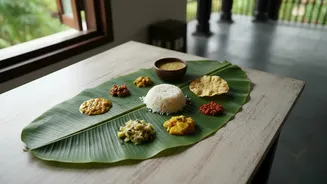
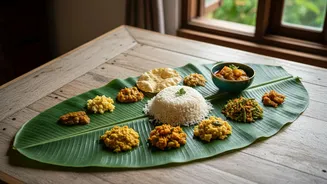
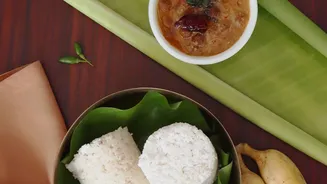
A Sadhya is more than just a meal; it’s a cultural experience. Traditionally, guests sit cross-legged on mats on the floor, though tables are common now. The 'plate' is a large, fresh banana leaf, laid with its narrower end pointing to the left of the guest.
Before the food arrives, some may sprinkle water on the leaf and wipe it clean. The specific placement of each dish on the leaf is a tradition passed down through generations. Typically, the top half of the leaf is reserved for all the side dishes and accompaniments, while the bottom half is for the rice and the main curries that will be mixed with it.
The Opening Act: Pickles and Chips
The feast begins with a series of small, potent flavours served on the top left corner of the leaf. This includes crunchy Upperi (banana chips) and Sharkara Varatti (jaggery-coated banana chips). You'll also find a variety of pickles (Achar), like sour mango (Kadumanga) and lime (Naranga), alongside a sweet and tangy ginger relish called Inji Puli. These are meant to be eaten in small quantities throughout the meal to cleanse the palate and provide contrasting flavours.
The Vegetable Ensemble
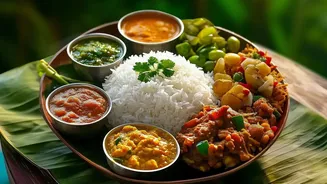
Next comes a colourful array of vegetable preparations. A star dish is Avial, a thick mixture of various vegetables cooked in a coconut and yogurt gravy. You'll also find Thoran, which is finely chopped vegetables stir-fried with grated coconut, and Erissery, a mild and comforting dish often made with pumpkin and beans in a coconut base. Other preparations include Pachadi and Kichadi, which are yogurt-based dishes; Pachadi is typically sweet (like pineapple in yogurt), while Kichadi is more savoury (often made with cucumber or bitter gourd).
The Main Event: Rice and Curries
Once the accompaniments are served, a mound of fluffy red Matta rice is placed on the bottom half of the leaf. The first course is Parippu, a simple but delicious curry made from moong lentils, which is poured over the rice and mixed with a spoonful of ghee. Following this, Sambar, a flavourful lentil-based stew with vegetables and tamarind, is served. This is often followed by other liquid curries like Kalan, a yogurt and coconut dish, or Pulissery, a tangy buttermilk curry. Rasam, a thin, peppery and tamarind-based soup, is usually served towards the end of the main course to aid digestion.
The Sweet Conclusion: Payasam
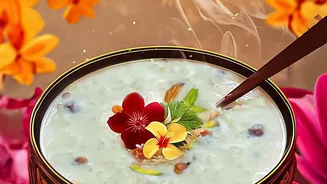
No Sadhya is complete without Payasam, the traditional dessert. A full feast may feature two or three varieties. Popular types include Palada Payasam, made with milk, sugar, and tiny rice flakes, and Parippu Payasam, a richer dessert made with lentils, jaggery, and coconut milk. It's perfectly acceptable to eat the payasam directly off the leaf, sometimes mixing it with a small, mashed banana for a unique flavour combination.
Sadhya Etiquette
The traditional way to enjoy a Sadhya is by eating with your right hand. There's a practical art to it: using your fingertips to mix the rice with the various curries and side dishes to create different flavour combinations in each bite. You start with the Parippu and ghee, moving through the Sambar and other curries in sequence. Don’t feel rushed; a Sadhya is meant to be savoured. Once the meal is over, it is customary to fold the banana leaf. Folding the top half down over the bottom half signifies you are content and enjoyed the meal.