



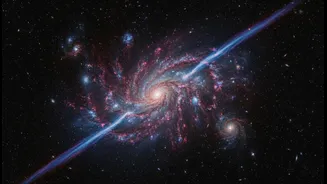


A New Window Into Galactic Chaos
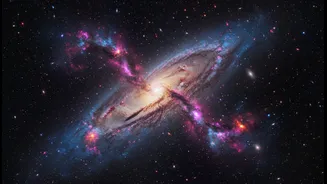
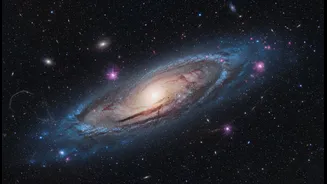
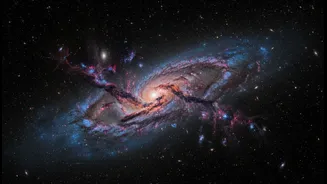
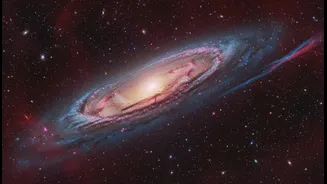
Located a relatively close 11 to 13 million light-years away, Centaurus A is a galaxy known for its chaotic beauty. It's the result of a massive collision between two galaxies billions of years ago, a cosmic smash-up that left it with peculiar dust lanes
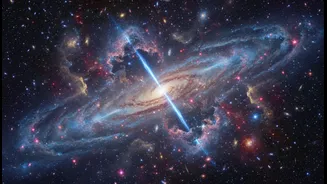
and a supermassive black hole at its core that is actively feeding. While the Hubble telescope gave us tantalizing glimpses, its visible light vision was blocked by the thick dust. Webb’s powerful infrared instruments, however, can pierce through this dusty veil. The new images reveal the galaxy's core in unprecedented detail, transforming what was once a hazy glow into a densely packed field of millions of individual stars. It’s like finally getting a look inside a machine that astronomers had previously only been able to study from the outside.
The Scientific Windfall: Unpacking the Benefits
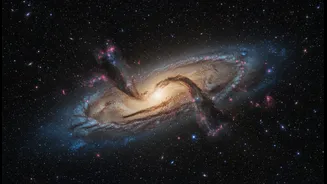
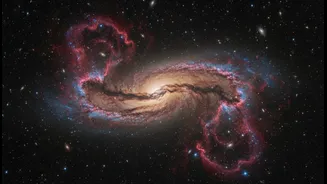
The primary benefit of this new image is the sheer volume of data it provides for 'galactic archaeology'. With the ability to resolve individual stars, astronomers can now start to piece together the galaxy's violent history, star by star. They can distinguish between older stars that existed before the merger and younger generations of stars born from the collision's chaotic aftermath. Furthermore, Webb’s view of the strange, S-shaped and parallelogram-like dust structures gives scientists a direct look at how a supermassive black hole’s jets and energy output can shape the galaxy around it. It's a closeup view of the cosmic feedback loop where a black hole can both trigger bursts of star formation by compressing gas and also halt it by blasting away the raw materials.
Calculated Risks and Cosmic Costs
When we talk about 'risks' in this context, it's not about danger, but about trade-offs and challenges. The James Webb Space Telescope is one of the most in-demand scientific instruments ever built. For its latest cycle, astronomers requested nine times more observing time than was available. Dedicating a significant amount of precious telescope time to one target like Centaurus A is a calculated decision. It comes with an opportunity cost—time that could have been spent looking at the very first galaxies or studying exoplanet atmospheres. Another risk lies in the data itself. The new images have revealed perplexing features, like the unusual 'S' shape at the galaxy's core, that current models cannot easily explain. This challenges existing theories and requires immense computational and intellectual effort to interpret, with the risk that initial conclusions may be wrong. Finally, there is always the operational risk of running a multi-billion dollar observatory, where every decision about instrument use and observation strategy is carefully weighed.
From Image to Insight: The Practical Next Steps
A stunning image like this is not an endpoint; it's the starting gun for a new wave of research. The first step involves astronomers from around the world poring over the public data. As one NASA official noted, discoveries build over time, and new observatories expand on the foundations of previous ones. Scientists will now work to catalogue the millions of stars, mapping their ages and locations to build a detailed historical timeline. Theoretical astrophysicists will take the new data on dust structures and gas movements to create and refine computer simulations of galactic mergers and black hole feedback. We can also expect proposals for follow-up observations, not just with Webb but with other telescopes that observe in different wavelengths, like radio arrays, to get a more complete picture of the processes at play. This single image has effectively opened up a new field of study into our nearest active galactic neighbour.