




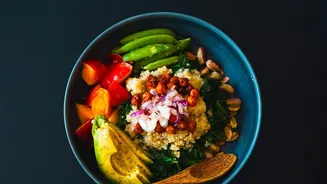

The 100-Gram Showdown
On paper, a 100-gram comparison seems to give a clear winner. Cooked quinoa offers about 120 calories, 4.4 grams of protein, and 2.8 grams of fibre. In contrast, 100 grams of puffed rice (murmura) contains roughly 350-400 calories, but with more carbohydrates
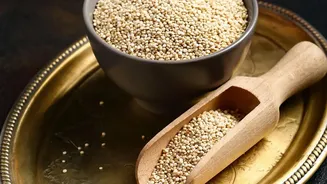
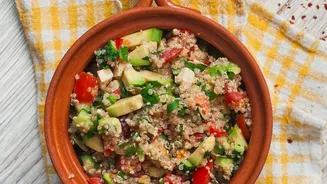
and less protein and fibre. Quinoa also boasts a complete amino acid profile, meaning it's a complete protein, and it's packed with minerals like magnesium and iron. Based on these numbers alone, quinoa appears far superior, offering more balanced nutrition for fewer calories.
The Portion Size Twist
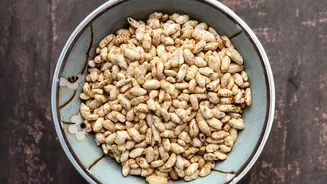
Here’s where the comparison gets interesting. Nobody eats 100 grams of plain puffed rice in one sitting. Because it's so light and airy, 100 grams would fill several large bowls. A more realistic serving, like a cup or a 'katori', weighs only about 15-25 grams and contains just 55-100 calories. On the other hand, 100 grams of cooked quinoa is a dense, compact portion, roughly half a cup. So, while quinoa is less calorie-dense by weight, puffed rice is significantly less dense by volume. This difference is crucial for satiety—the feeling of fullness. You can eat a large, visually satisfying bowl of puffed rice for very few calories.
A More Realistic Face-Off
Let's compare a more typical snack-sized portion: one cup. One cup of puffed rice has about 54 calories, 12 grams of carbohydrates, and 1 gram of protein. A cup of cooked quinoa, however, contains around 222 calories, 39 grams of carbs, and 8 grams of protein. Suddenly, the picture changes. For a light, low-calorie snack, puffed rice is the clear winner. For a substantial, protein-rich meal base that will keep you full for hours, quinoa takes the lead. The 'healthier' choice depends entirely on your goal for that specific meal or snack.
Beyond Calories: Satiety and Blood Sugar
Nutrition is more than just calories. Satiety and blood sugar impact are also vital. Quinoa's combination of protein and fibre slows down digestion, leading to a longer feeling of fullness and a more stable release of energy. It has a low glycemic index (GI) of around 53, meaning it doesn't cause a sharp spike in blood sugar. Puffed rice has a much higher GI (often above 80), providing a quick burst of energy that can lead to a crash later. This makes quinoa a better choice for sustained energy and blood sugar management, while puffed rice is better for a quick, pre-workout energy boost.
The Verdict: How To Choose For Your Goals
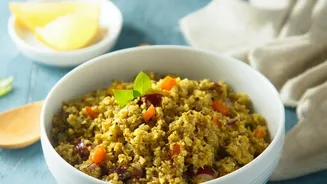
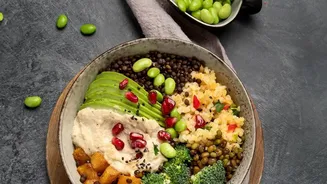
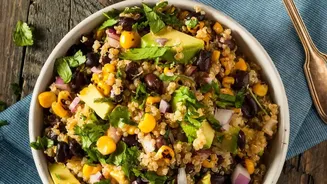
Neither food is inherently 'bad'. The smart approach is to use them for their strengths. Puffed rice is an excellent low-calorie base for snacks like bhel puri, especially when mixed with nutrient-dense additions like sprouts, vegetables, and chutneys. It provides bulk and crunch without a heavy calorie load, making it ideal for weight management. Quinoa shines as a meal foundation. Use it to replace rice or pasta for a dish that is higher in protein and fibre. It works well in salads, upma, or as a side dish to keep you feeling satisfied. The key is to recognise their different roles in a balanced diet.