





The Ancient Spiritual Roots
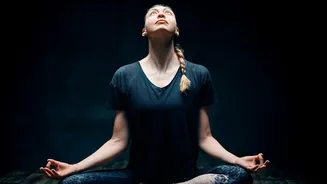
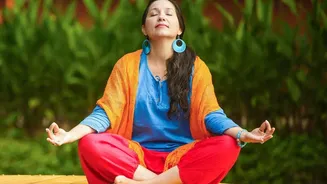
Yoga's journey begins in ancient India, with its earliest mentions found in sacred texts like the Rigveda. Initially, it was not about physical postures but a comprehensive spiritual discipline aimed at uniting the mind, body, and spirit to achieve 'moksha',
or liberation. Passed down orally from teacher to disciple, these early practices focused on meditation, prayer, and breathing techniques. Around 400 CE, the sage Patanjali systematised this knowledge in the Yoga Sutras, a foundational text that outlines the 'eight limbs' of yoga. This classical yoga was a path of mental discipline and self-realisation, far removed from the physical practice we know today.
A Bridge to the West
For centuries, yoga remained a largely philosophical and spiritual pursuit within India. The first significant step in its global journey occurred in 1893, when Swami Vivekananda addressed the Parliament of the World's Religions in Chicago. He did not teach physical postures, but rather presented Raja Yoga—the yoga of mental discipline—as a universal philosophy. His powerful speeches captivated Western audiences, introducing them to Indian spirituality and planting the seeds for yoga to take root in America. Vivekananda established Vedanta societies to share these teachings, creating the first formal bridge for yogic philosophy to cross into the West.
The Father of Modern Postural Yoga
The yoga that dominates global studios today, with its emphasis on physical postures (asanas), was largely shaped in the 20th century by one man: Tirumalai Krishnamacharya. Often called the 'father of modern yoga', Krishnamacharya was a scholar and healer who taught at the Mysore Palace. He developed a dynamic, physically rigorous style, linking breath with movement—a precursor to modern Vinyasa yoga. Crucially, he believed yoga should be adapted to the individual, a revolutionary concept at the time. His influence is felt through his most famous students, who would go on to popularise his teachings worldwide.
The Disciples Who Spread the Word
Krishnamacharya's legacy was carried globally by his remarkable students. B.K.S. Iyengar, his brother-in-law, developed Iyengar Yoga, a meticulous style focused on precise alignment and the innovative use of props like blocks and straps to make poses accessible to everyone. His 1966 book 'Light on Yoga' is still considered a foundational text. K. Pattabhi Jois systematised Krishnamacharya's teachings into Ashtanga Yoga, a physically demanding, set sequence of postures that gained a huge following after Jois first visited the U.S. in 1975. Another student, Indra Devi, became the 'First Lady of Yoga' after opening a studio in Hollywood in 1947, introducing the practice to celebrities and cementing its aspirational appeal.
From Counter-Culture to Big Business
In the 1960s, yoga was embraced by the counter-culture movement, seen as a path to spiritual enlightenment. The Beatles' famous visit to an ashram in Rishikesh further boosted its profile. But the true explosion came with its integration into the burgeoning wellness industry. Yoga transformed into a product: classes, teacher trainings, retreats, and a vast market for apparel and accessories. Today, the global yoga industry is worth billions, with an estimated 300 million practitioners worldwide. It is marketed as a tool for physical fitness, stress relief, and mental clarity, appealing to the demands of modern life.