







The Quest for Pure Heat
We all know someone—or maybe we are that someone—who proudly reaches for the bottle with the skull and crossbones on it, dousing their meal in a fiery liquid that promises pain. The modern food landscape is rife with a kind of culinary arms race, where
the Scoville scale is the ultimate measure of a dish's worth. This obsession with pure, unadulterated heat has led to a common misconception: that the intensity of the burn is the same as the quality of the flavour. But a truly memorable dish is more like a symphony than a single, blaring trumpet. While a blast of chilli can be exhilarating, it can also completely overwhelm the other notes that make a meal delicious. When your palate is scorched, you can no longer detect the subtle sweetness of a tomato, the earthy depth of cumin, or the bright tang of lime. Chasing heat for heat's sake often means you miss out on the very essence of what you're eating.
Spice Is a Sensation, Not a Taste
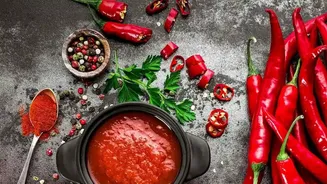
Here's the fundamental science: spiciness is not actually a taste. Your tongue has receptors for five basic tastes: sweet, salty, sour, bitter, and umami (a savoury, meaty flavour). When you eat something spicy, the chemical responsible, most often capsaicin from chillies, doesn't interact with your taste buds. Instead, it triggers pain and heat receptors connected to the trigeminal nerve, the same system that tells your brain if you've touched a hot stove. This is a phenomenon called chemesthesis. Your brain interprets this signal as a literal burning sensation. That tingling, numbing, and sweating is your body's reaction to perceived pain, which can trigger a pleasant rush of endorphins for some. While this sensation can be enjoyable, it's a physical feeling, distinct from the five building blocks of flavour that chefs use to create harmony. A habanero pepper, for instance, has its own fruity flavour, but the intense heat it produces is a separate neural event.
The Five Pillars of Flavour
So, what is true flavour balance? It’s the artful combination of the five basic tastes. Think about how they work together to elevate a dish. Salt doesn't just make things salty; it enhances sweetness and suppresses bitterness, which is why salted caramel is so irresistible. Sourness, from citrus or vinegar, cuts through richness and fat, providing a clean, bright lift to a heavy stew or a fried dish. Sweetness can temper both sourness and excessive heat, which is why a touch of sugar or honey is common in many Thai curries. Bitterness, found in things like dark greens, coffee, or cocoa, provides a deep, grounding counterpoint to sweetness. And umami, the savoury depth found in mushrooms, soy sauce, and aged cheese, adds a satisfying richness that makes a dish feel complete. A perfectly balanced dish ensures no single element shouts over the others; instead, they work in concert to create a more profound and satisfying experience.
Learning from the Masters of Balance
Many of the world's most beloved cuisines are masterclasses in balancing heat with the other core tastes. Thai food, for example, is famous for its intricate dance of spicy, sour, sweet, salty, and bitter flavours in a single dish. A green curry paste brings the heat, coconut milk provides fatty richness and a touch of sweetness, fish sauce adds salty umami, and a squeeze of lime at the end introduces a fresh, sour finish. Similarly, Mexican cuisine masterfully integrates chillies. A complex mole sauce can contain dozens of ingredients, with different chillies providing not just heat but also fruity, smoky, and earthy notes that are balanced by sweet chocolate, sour tomatoes, and savoury spices. In these culinary traditions, spice is an integral component, used to enhance and complement, never to dominate and destroy.
How to Train Your Palate
Retraining your brain to appreciate balance over brute force is easier than you think. The next time you eat, take a moment to actively identify the different components. When you have a plate of food, ask yourself: Where is the saltiness coming from? Can I detect sweetness? Is there an acidic element brightening everything up? Is there a hint of bitterness? Is it rich with umami? Start by cooking with this in mind. If your tomato sauce tastes a little flat, it might not need more salt; it might need a squeeze of lemon to brighten the acidity or a pinch of sugar to balance it. If a dish feels too rich, a splash of vinegar can provide a necessary cut-through. By consciously thinking in terms of these five pillars, you'll start to notice the complexity in your favourite foods and move from simply enduring heat to truly understanding and enjoying flavour.