





The Urban Stargazing Challenge
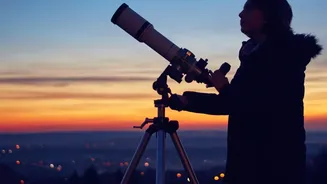
The main obstacle for any city-based astronomer is light pollution. The combined glow from streetlights, buildings, and traffic creates a bright haze, or 'sky glow,' that washes out all but the brightest celestial objects. While this means you are unlikely
to see the faint, misty band of the Milky Way from a dense urban core, it doesn’t mean the sky is empty. The Moon, bright planets like Venus, Jupiter, and Saturn, and major constellations are still very much within reach. The trick is knowing how and where to look.
Your Phone as a Pocket Planetarium
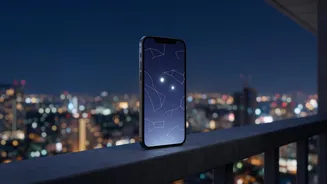
Modern apps are the urban stargazer's single most important tool. Augmented reality (AR) apps can identify celestial objects in real-time. Simply point your phone at the sky, and the app will overlay the names of stars, constellations, planets, and even satellites like the International Space Station (ISS). Popular and user-friendly options include Star Walk 2, which is great for beginners, and SkyView, which provides a simple and informative AR experience. For those wanting a more detailed and realistic map, Stellarium Mobile is an excellent choice, offering a vast database of celestial objects. Many of these apps also help you find objects by providing arrows to guide your view.
Mastering Your Smartphone's Camera
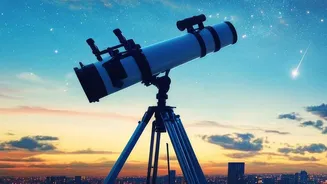
Capturing what you see is the next step, and modern phone cameras are surprisingly capable. Forget the simple point-and-shoot mode; the key is to use the 'Pro' or 'Night' mode, which gives you manual control over the camera's settings. First, lower the ISO, which controls the sensor's sensitivity to light, to reduce graininess in the final image. Next, you will need to set a long shutter speed (also called exposure time). An exposure of 10 to 30 seconds will allow the camera to gather enough light to capture faint stars. Manually setting the focus to infinity is also crucial, as autofocus will struggle in the dark. A small, inexpensive tripod is almost essential here, as it will keep the phone perfectly still during the long exposure, preventing blurry images or star trails.
Smart Techniques to Beat the Glow
Beyond technology, simple techniques can significantly improve your viewing experience. First, find the darkest spot you can safely access. This could be a park, a rooftop, or even a balcony that is shielded from direct streetlights by buildings. Turning off any lights in your immediate vicinity makes a huge difference. Second, give your eyes time to adapt. It takes at least 20-30 minutes for your eyes to fully adjust to the darkness, allowing you to see much fainter stars. Avoid looking at your bright phone screen during this time; many stargazing apps offer a red-light mode which helps preserve your night vision. Finally, timing is everything. The best views are often on cold, clear nights when there is less atmospheric turbulence.