




From Lone Wolf to Robotic Pack
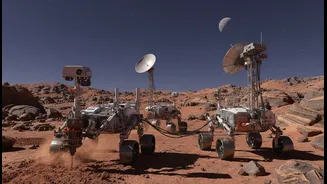
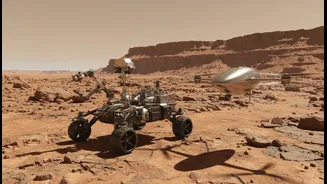
The spirit of this new strategy is embodied in a project called CADRE, which stands for Cooperative Autonomous Distributed Robotic Exploration. While its first test mission is slated for the Moon in 2026, the technology is a direct blueprint for how NASA
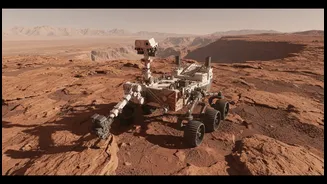
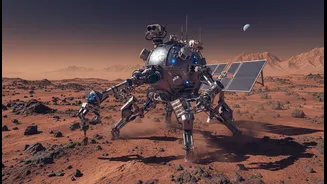
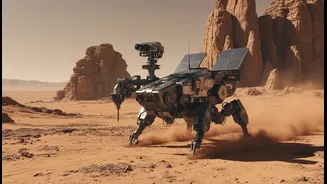
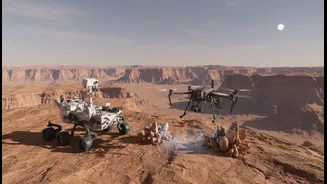
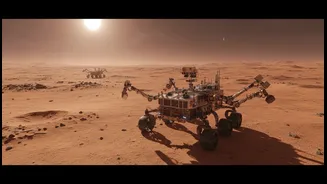
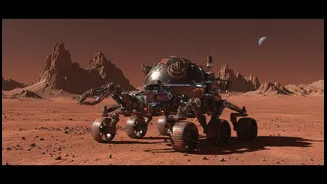
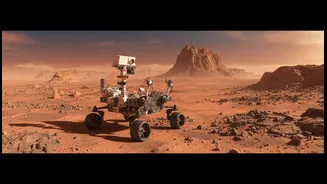
could explore Mars and other celestial bodies in the future. Instead of sending one large, highly complex rover like Perseverance or Curiosity, the idea is to deploy a team of smaller, suitcase-sized robots that work together. This isn't just about having more wheels on the ground; it's about creating a robotic network that can make decisions and conduct science without constant step-by-step instructions from human operators millions of miles away on Earth.
The Power of Teamwork
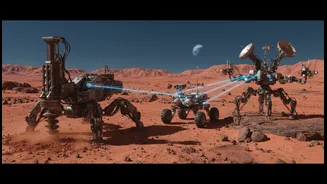
The key innovation behind CADRE is its cooperative autonomy. The rovers communicate with each other and a base station via a mesh network, sharing information about the terrain and their own status. They will even autonomously elect a "leader" for a given task, which then divides the work among the team members. This allows them to perform tasks that are impossible for a single robot. For example, by using ground-penetrating radar from multiple points simultaneously, the team can build a 3D map of the subsurface, a crucial tool in the search for resources like water ice. This collaborative approach allows for much faster and more comprehensive data collection than the point-by-point measurements of a solo rover.
Why This Changes Everything for Mars
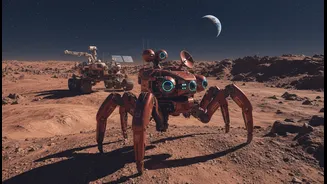
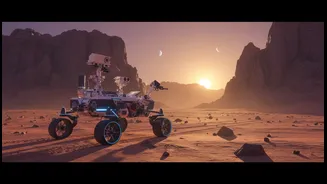
On Mars, this new paradigm could be revolutionary. Current rovers like Perseverance, while incredibly capable, are operated with extreme caution. Mission planners on Earth painstakingly plot out every move, a slow process dictated by the long communication delays. This limits the speed and range of exploration. A team of autonomous robots could change that. One robot could scout ahead for hazards, allowing the others to travel more quickly and confidently. They could spread out to survey a wide area in a fraction of the time or venture into risky but scientifically interesting terrain—like steep crater walls or narrow cave entrances—that would be deemed too dangerous for a multi-billion dollar flagship rover. If one small rover gets stuck or fails, the mission can continue, a level of redundancy that is impossible with a single-asset mission.
Smarter, Faster, and More Efficient
This push towards autonomy is already being tested on Mars. In late 2025, the Perseverance rover performed its first-ever drives planned by an AI, using it to analyze terrain and generate safe waypoints without human input. These early tests are proving that rovers can think for themselves, making missions more efficient and increasing the amount of science they can perform. The CADRE concept takes this a step further, distributing that intelligence across a team. This approach could significantly accelerate the pace of discovery, helping NASA identify the most promising locations for finding signs of past life and mapping out resources that would be vital for future human astronauts. This is part of a broader NASA strategy to develop more advanced robotic systems that can travel farther and faster across challenging landscapes.