







The Price Is No Longer Right
The relentless hunt for the lowest ticket price has long defined Indian air travel. Comparison websites and apps have trained passengers to focus on the fare, often overlooking everything else. But as the aviation network grapples with congestion, crew
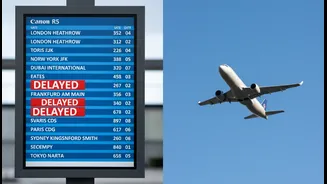
shortages, and other operational challenges, the hidden costs of a 'cheap' ticket are becoming painfully clear. A delay of a few hours can lead to a missed business meeting, a spoiled family event, or unexpected expenses for food and accommodation. Consequently, a growing number of flyers are realising that the cheapest flight is not always the best value, especially when the risk of disruption is high.
Reliability Is the New Priority
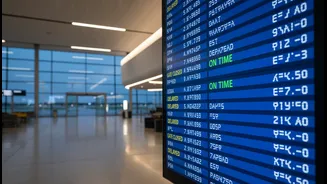
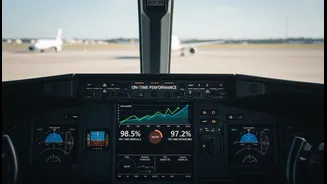
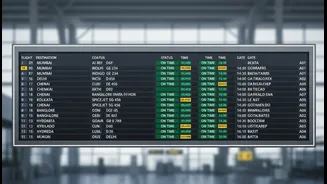
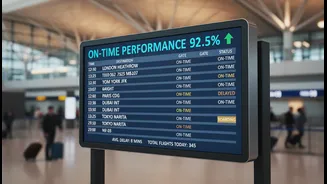
In this new environment, on-time performance (OTP) has transformed from an industry metric into a crucial decision-making tool for passengers. Travellers are increasingly looking past fare wars and digging into data to find the most dependable carrier. Reports from the Directorate General of Civil Aviation (DGCA) and independent analytics firms like Cirium are gaining mainstream attention. For instance, when Air India ranked as the fourth most punctual airline globally in June 2026 with an on-time arrival rate of nearly 87%, it highlighted how reliability is becoming a point of competition. This focus rewards airlines that can maintain schedule integrity and penalises those that can't, irrespective of their pricing.
Beyond Delays: A New Checklist
The modern comparison goes deeper than just delays. Savvy travellers are now evaluating a 'reliability stack' that includes several factors. Cancellation rates have become a major red flag; a cheap ticket is worthless if the flight doesn't operate. According to a LocalCircles survey, 61% of passengers faced cancellations in the past year, often due to internal airline issues. Baggage handling performance and even the type and age of the aircraft on a route are also coming under scrutiny, as travellers seek to minimise every potential point of friction. This multi-faceted approach shows a clear shift from a purely price-led decision to a risk-assessment model where passengers weigh the likelihood of a smooth journey against the ticket cost.
The Fading Power of Brand Loyalty
This shift is also testing brand loyalty. Even passengers who have been faithful to one airline for years are now more willing to switch if a competitor demonstrates better operational performance. Loyalty is becoming conditional, earned not just through points and perks, but through consistent, reliable service. Airlines are recognising this; recent loyalty program collaborations, like the one between IndiGo and Accor, aim to create a more holistic travel experience. However, the core promise remains getting passengers to their destination on time. An airline that repeatedly fails to deliver on this fundamental promise will struggle to retain customers, no matter how attractive its rewards program is.
How the Industry Is Adapting
Airlines and booking platforms are slowly beginning to respond to this new consumer demand. Some carriers with strong OTP records are starting to feature these statistics in their marketing, framing reliability as a key selling point. On the technology front, there's a push for greater transparency, with some travel websites potentially integrating more visible reliability metrics into their search results. The industry is moving toward a future where experience, predictability, and peace of mind are central to the value proposition, not just ancillary add-ons. This evolution is necessary in a market where passengers are more informed and less tolerant of disruptions than ever before.