

More Than Just Walking with Sticks
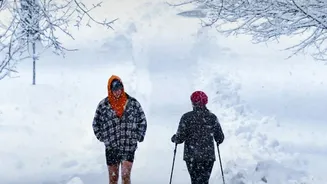
At first glance, Nordic walking looks like hiking, but it’s a distinct fitness technique with its own equipment and goals. Originating in Finland as off-season training for cross-country skiers, it's designed to turn a simple walk into a whole-body workout.
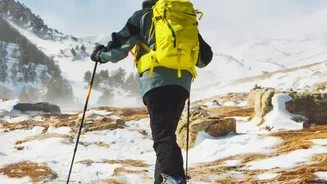
Unlike trekking poles, which are primarily used for stability on uneven terrain, Nordic walking poles are designed for propulsion. By planting the poles and pushing off with each stride, you engage your upper body muscles, including your arms, shoulders, back, and core. This coordinated movement engages up to 90% of the body's muscles, compared to about 50% with regular walking.
The Science of a Slower Burn
The key appeal of Nordic walking is that it provides a more intense workout than regular walking without feeling significantly harder. Studies show it can burn up to 45% more calories than walking at the same speed. The engagement of the upper body increases oxygen consumption and elevates heart rate more than conventional walking, providing superior cardiovascular benefits. It's also remarkably gentle on the body. The poles help to distribute your weight, reducing the load and impact on joints like the knees, hips, and ankles, which is a major advantage for people with arthritis or those recovering from injury. Furthermore, research has indicated benefits for posture improvement, balance, and easing chronic pain.
Why Now? The Appeal of a Gentler Pace
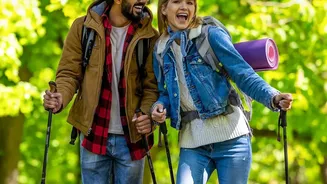
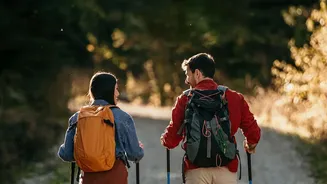
The revival of Nordic walking aligns with a broader shift in wellness culture towards more sustainable and mindful forms of exercise. After years dominated by high-impact, high-intensity interval training (HIIT), many are seeking activities that build fitness without leading to burnout or injury. The gradual, rhythmic nature of Nordic walking is a perfect fit. It is accessible to nearly all ages and fitness levels, from professional athletes to seniors looking to improve mobility and stability. Its low-impact nature makes it a safe and effective long-term fitness solution. The social aspect is also a significant driver; Nordic walking groups and clubs are growing, offering community and motivation.
Mastering the Basic Technique
While you can learn on your own, a session with a qualified instructor is the best way to ensure you get the full benefits. The fundamental technique involves an opposite-arm-to-opposite-leg motion. As your left foot steps forward, your right arm swings forward to plant the pole. The key is to plant the pole at an angle behind you and push through to propel yourself forward. As your arm extends fully to the back, you open your hand slightly, pushing through the specialised glove-like strap. This creates a smooth, flowing motion that engages the upper body and core. Maintaining an upright posture with a slight forward lean from the ankles is crucial.
Gearing Up to Get Started
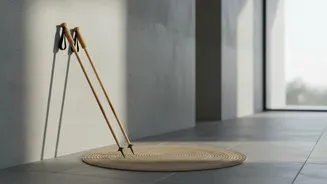
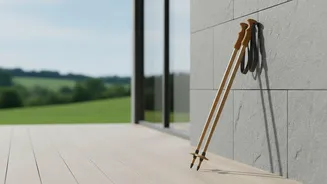
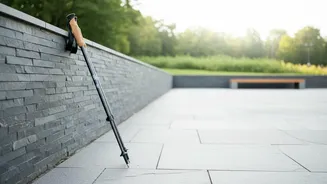
The only essential equipment is a pair of proper Nordic walking poles. It's important not to confuse them with trekking or hiking poles, as they feature a different strap system designed for the specific push-off technique. Poles come in fixed-length or adjustable varieties. While fixed-length poles are often lighter, adjustable ones are great for beginners or if they will be shared. The correct pole length is crucial; a common rule of thumb is to multiply your height in centimetres by 0.68, or ensure your elbow is at a 90-degree angle when holding the grip with the pole tip on the ground. Beyond poles, all you need are comfortable walking shoes and weather-appropriate clothing.