





A Universe Built on Belief
For years, homegrown science fiction struggled to find its footing in India, often feeling like a faint echo of Hollywood. But a new wave of filmmaking is proving that the key to unlocking the genre for Indian audiences wasn't to copy the West, but to embrace
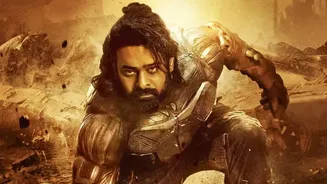
the East. Films like 'Brahmāstra: Part One – Shiva' and 'Kalki 2898 AD' are not just movies; they are the beginnings of entire cinematic universes built on concepts familiar to every Indian household. 'Brahmāstra' introduced the 'Astraverse,' a world inspired by ancient Hindu texts where divine weapons exist in the modern world. Similarly, 'Kalki 2898 AD' dives deep into Hindu mythology, re-imagining the prophesied tenth incarnation of Lord Vishnu within a dystopian, technologically advanced future. This approach works because it doesn’t ask audiences to buy into a completely alien world. Instead, it invites them into a future that has grown directly from their own cultural and spiritual past.
The Power of Local Storytelling
While big-budget mythological epics grab headlines, the same principle of rootedness is winning hearts on a smaller scale. Take 'Minnal Murali,' a film widely celebrated as India's first great superhero movie. Its success didn't come from replicating Marvel's city-destroying spectacles. Instead, it focused on Jaison, a tailor in a small Kerala village who gets superpowers after being struck by lightning. The film's charm lies in its determinedly local flavour; the hero’s first mask is a traditional towel, and the conflict remains a personal, village-centric affair rather than a world-ending threat. This hyper-local approach makes the fantastical elements feel believable. By grounding the superhero in a familiar social and cultural context, the film bypasses the awkwardness that plagued earlier Indian attempts at the genre. The story is less about the powers and more about the man, his community, and his very relatable, small-town dreams and heartbreaks.
Mythology Meets Advanced Tech
The visual spectacle in these films is undeniable, but the technology is rarely generic. In 'Kalki 2898 AD,' the futuristic design is deeply intertwined with mythological aesthetics. Flying vessels have serpentine designs, and the architecture of the dystopian city of Kashi contains hidden carvings of deities, symbolizing a hope that persists even in decay. The film uses cutting-edge visual effects not just for explosions, but to bring divine battles and celestial realms to life, creating a sensory experience that feels both futuristic and ancient. This fusion serves a dual purpose: it offers a critique of technological overreach and societal decay while simultaneously re-imagining ancient stories for a modern audience. The result is a unique cyberpunk flavour where QR codes are grafted onto skin, but the underlying story is a timeless battle between good and evil drawn from the Mahabharata.
Emotion as the Essential Foundation
Ultimately, the technology and spectacle would feel hollow without a strong emotional core. This is where Indian filmmakers are truly excelling. 'Brahmāstra' was built around the theme that love is the greatest power of all, a concept that drives the hero's journey. In 'Minnal Murali,' the narrative gives equal, if not more, weight to the villain, whose tragic backstory evokes empathy and makes the final conflict more meaningful. The film focuses heavily on character development and the emotional stakes behind the superhero drama. This emphasis on emotion is the bridge that allows audiences to connect with otherwise unbelievable scenarios. Pure, sterile science fiction has a history of failing to connect in India because it often lacks this cultural and emotional resonance. By grounding futuristic and fantastical plots in universal themes of love, duty, sacrifice, and community, these films give audiences a reason to care about the characters, not just the chaos around them.