



Hyper-Arid Deserts
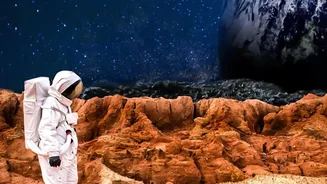
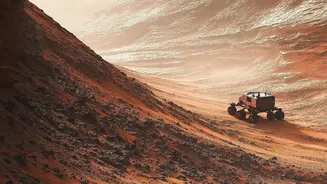
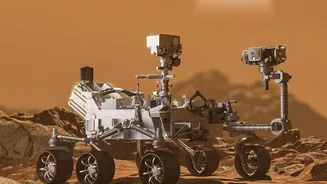
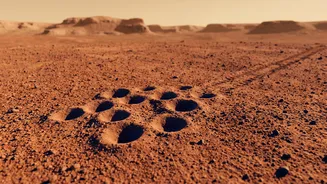
Before we send rovers to the rusty, barren surface of Mars, scientists test them and their instruments in Earth's driest places, like the Atacama Desert in Chile and the Mojave Desert in the United States. These landscapes are considered strong "Mars
analogs" because their extreme dryness, soil chemistry, and intense UV radiation are the closest natural conditions we have to the Martian surface. In the Atacama, scientists have found microbes living inside rocks (endoliths) and salt crusts, protected from the harsh environment. Studying how these organisms survive with minimal water helps researchers know what kinds of life to look for on Mars and where to find it, perhaps hidden just beneath the surface or within rock formations.
Antarctica's Icy Realms
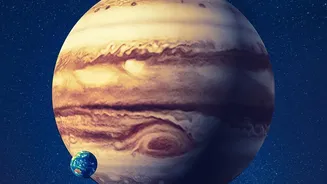
The moons of Jupiter and Saturn, like Europa and Enceladus, are believed to have vast liquid water oceans hidden beneath thick ice shells. To understand these potential habitats, scientists turn to Antarctica. The continent's subglacial lakes, such as Lake Vostok, which is buried under kilometres of ice, are excellent analogs. These environments are defined by extreme cold, immense pressure, and a complete lack of sunlight. Researchers also study places like the McMurdo Dry Valleys, one of the driest and coldest deserts on the planet, which closely resembles the surface of Mars. By examining the life that persists there, like microbes found in brine films between ice and salt, scientists gain clues about how life might endure in the icy oceans of distant moons.
Deep-Sea Hydrothermal Vents
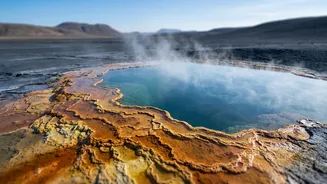
Far below the ocean surface, where sunlight never reaches, hydrothermal vents spew superheated, mineral-rich water from the Earth's crust. These ecosystems are completely independent of the sun, with life based on chemosynthesis—creating energy from chemical reactions rather than light. This is crucial for astrobiology, as it provides a model for how life could exist in the dark, subsurface oceans of moons like Europa. Scientists study the unique bacteria and other organisms that thrive in these high-pressure, high-temperature, and often toxic environments to understand the fundamental biochemistry that could support life in similar settings across the solar system.
Acidic and Iron-Rich Rivers
Spain's Rio Tinto river is a striking and bizarre landscape. Its waters are highly acidic and stained deep red by iron, a result of the chemical reactions of iron-oxidizing bacteria. This environment serves as a valuable analog for early Mars, when the planet was wetter and known to have iron-rich geology. The extremophiles that thrive in Rio Tinto, tolerating high acidity and heavy metals, demonstrate that life can flourish in conditions we would consider toxic. By studying these microbes, scientists can refine their models for what past life on Mars might have looked like and how its biosignatures might be preserved in ancient Martian rocks.
The Ultimate Survivors: Extremophiles
Underpinning all of this research is the study of extremophiles—organisms that thrive in extreme conditions. These include thermophiles that love heat, psychrophiles that love cold, halophiles that thrive in salt, and radioresistants that can withstand massive doses of radiation. One particularly famous example is Deinococcus radiodurans, a bacterium that can repair its own DNA after being shattered by radiation, allowing it to survive conditions found in outer space. By understanding the molecular machinery that allows these organisms to survive, scientists can define the absolute limits of life as we know it, broadening the range of environments considered potentially habitable on other planets.