




The Sun’s Volatile Nature
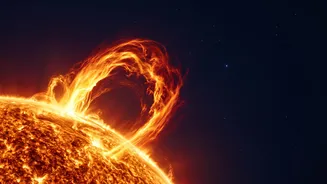
A solar storm occurs when the Sun unleashes a massive burst of energy. This can take the form of a solar flare—an intense blast of radiation—or a coronal mass ejection (CME), which is a huge cloud of charged particles and magnetic fields hurled into space.
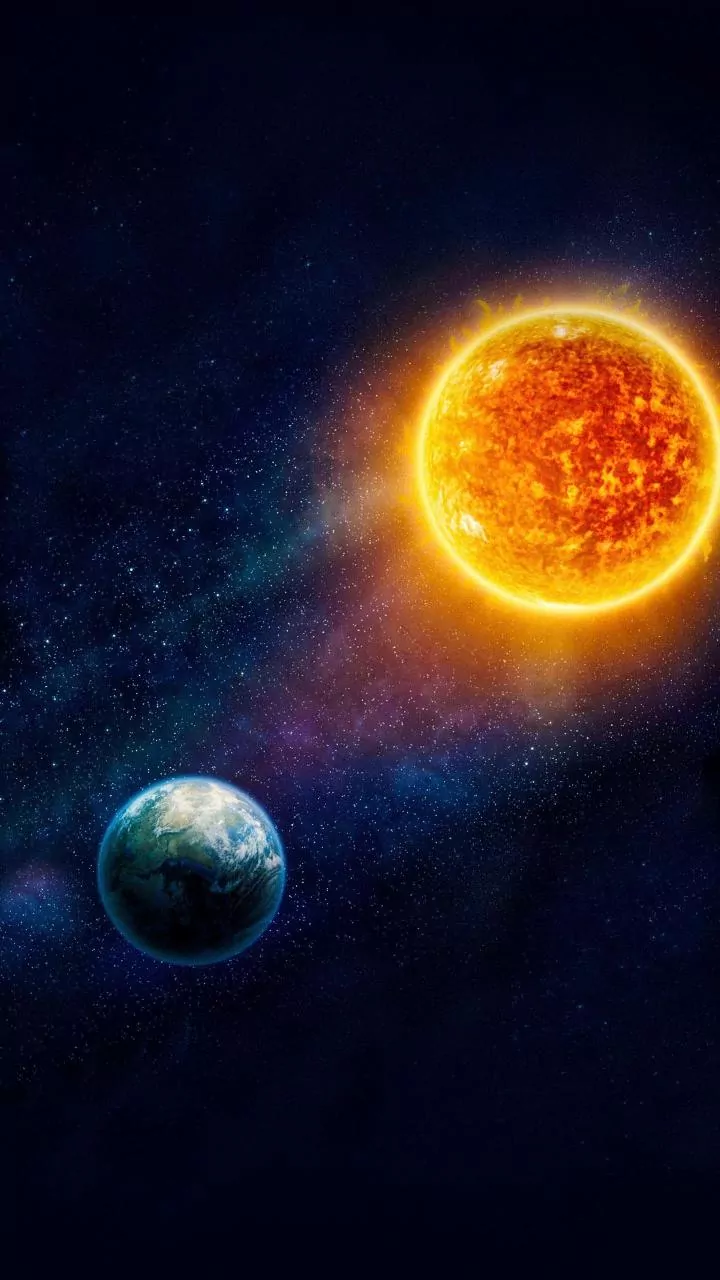
If a CME is aimed at Earth, it can interact with our planet's magnetic field and cause a geomagnetic storm. While these create beautiful auroras, they also have a dark side. A powerful storm could cripple power grids, damage or destroy satellites vital for GPS and communication, and disrupt radio signals for days.
The Prediction Problem
Forecasting space weather is far harder than predicting weather on Earth. The primary challenge is the Sun's chaotic and complex nature. These events develop and travel at incredible speeds, with a CME taking anywhere from one to three days to reach Earth. This leaves a very short window for any meaningful preparation. Scientists monitor the Sun using a fleet of satellites and ground-based telescopes, but the sheer volume of data is overwhelming. Spotting the subtle precursors to an eruption is like trying to find a specific grain of sand in a vast, swirling desert.
A Deluge of Data
Modern solar observatories generate terabytes of data daily, capturing images of the Sun in different wavelengths of light. For a human analyst, sifting through this information to find tell-tale signs of an impending eruption in real-time is almost impossible. By the time a pattern is confirmed, the event may already be underway. Furthermore, linking an event on the Sun’s surface to its potential impact on Earth requires incredibly complex modeling. We can see an eruption, but knowing its exact trajectory, speed, and magnetic orientation—all crucial for determining its threat level—is a massive challenge.
How AI Changes the Game
This is where artificial intelligence comes in. AI, specifically machine learning, is perfectly suited to tackling problems involving massive datasets and subtle pattern recognition. By training algorithms on years of historical solar data, scientists can teach them to identify the faint precursors to solar flares and CMEs that human eyes would miss. AI models can analyze the constant flow of information from solar observatories far faster than any human team, flagging potential threats in minutes rather than hours.
AI Models in Action
Several promising AI projects are already underway. One model, known as DAGGER, uses AI to analyze real-time measurements of the solar wind to predict a storm's impact on Earth with about 30 minutes of warning. Another, a collaboration between NASA and IBM called Surya, analyzes images from the Solar Dynamics Observatory to forecast the location of dangerous solar flares. More recently, a model called EarlyDetect has shown the ability to spot the acoustic and magnetic signs of an emerging active region up to nine hours before it becomes visible, providing an even longer lead time. These tools are shifting the field from simply detecting an eruption to actually forecasting its consequences.
The Future of Space Weather Alerts
The goal is not just to get a warning, but to get a useful one. An extra 30 minutes or even several hours of lead time could be revolutionary for mitigating the worst effects of a solar storm. It would give power grid operators time to reroute power and protect transformers, allow satellite operators to put their spacecraft into a safe mode, and help airlines reroute flights away from polar regions where radiation exposure is highest. While we can't stop solar storms, AI is giving us the tools to see them coming and prepare our increasingly tech-dependent world for impact.