







Why We Need to Rethink Salt
Many people in India consume nearly double the World Health Organization's recommended daily limit of salt. This high intake is linked to significant health risks, including high blood pressure (hypertension), which strains the heart and blood vessels
and increases the risk of heart disease, strokes, and kidney problems. The challenge is that salt is a powerful flavour enhancer. Simply removing it can make food taste flat. The good news is that this doesn't have to be the case. By learning to build flavour with other ingredients, you can reduce sodium intake significantly without feeling deprived. In fact, your meals might become even more exciting.
The Power of Spices
Spices are the cornerstone of Indian cooking, and they are your greatest allies in a low-sodium kitchen. They add complexity, aroma, and depth that salt alone cannot provide. Spices contain chemical compounds that stimulate our taste and smell receptors, creating a rich sensory experience. Instead of reaching for more salt, build a base with classics like turmeric, cumin, coriander, and garam masala. Don't be afraid to experiment with others like smoked paprika for a smoky depth, chilli flakes for heat, or black pepper, which can enhance the perception of other flavours. When buying pre-made spice blends, check the label to ensure they are salt-free, as many commercial masalas contain high amounts of added sodium.
The Brightness of Acid
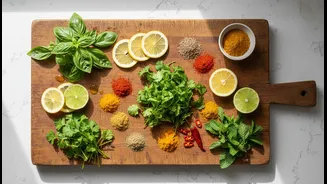
Acid is a secret weapon in the flavour arsenal. It provides a brightness and tang that can trick your palate into not missing salt. Ingredients like lemon juice, lime, vinegar, tamarind (imli), and dried mango powder (amchoor) can lift and enhance the natural flavours in a dish. A squeeze of lemon over dal, grilled fish, or vegetables right before serving can transform the entire meal. Different vinegars, such as apple cider or balsamic, can be used in salad dressings and marinades to add a complex tang without any sodium. The acidity cuts through richness and balances flavours, making everything taste more vibrant and intentional.
Harnessing Fresh Herbs
Fresh herbs add a layer of clean, vibrant flavour that you can't get from dried spices alone. Think of the fresh kick of coriander leaves (dhania) on a curry, the cooling effect of mint in a raita, or the unique aroma of curry leaves in a tadka. These herbs not only provide flavour but also valuable nutrients. When cooking, it's often best to add delicate herbs like coriander and mint towards the end of the process to preserve their fresh taste. Hardier herbs like rosemary can be added earlier. Don't underestimate dried herbs either; kasuri methi (dried fenugreek leaves) adds a wonderfully complex and slightly bitter note to many North Indian gravies.
Building a Savoury Foundation
Great flavour starts from the ground up. Before you even think about salt, focus on building a deep, savoury base. The classic Indian combination of onion, ginger, and garlic is a perfect example of this. Sautéing them until they are well-browned creates a rich, complex foundation for any dish. You can also boost savouriness—often called umami—with other ingredients. Tomatoes, especially when cooked down into a paste, are a great source of umami. Mushrooms are another fantastic option, providing an earthy, meaty depth. Using low-sodium broths instead of water for soups and gravies is another simple trick. By layering these savoury elements, you'll find you need much less salt to make your food taste complete and satisfying.