




An Invisible Threat from 93 Million Miles Away
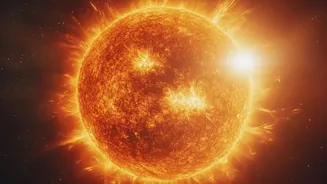
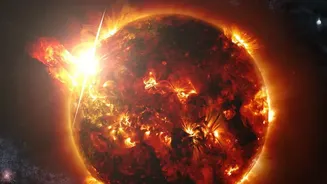
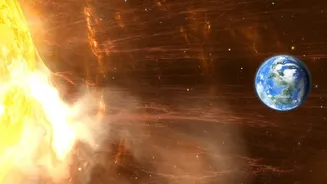
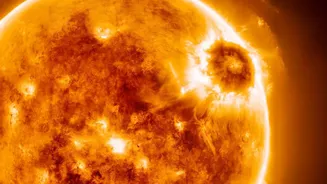
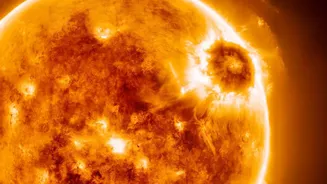
Imagine the sun, not as a gentle source of warmth, but as a temperamental giant, prone to violent outbursts. Occasionally, it unleashes a Coronal Mass Ejection, or CME. This is a colossal explosion of magnetised plasma and radiation from the sun's outer
atmosphere, blasting billions of tons of solar particles into space. If a CME happens to be aimed at Earth, it travels like a cosmic cannonball, taking anywhere from one to three days to reach us. While a solar flare is the bright flash of light that reaches us in eight minutes, the CME is the slower, more physically dangerous wave that follows.
How a Solar Storm Becomes an Earthly Problem
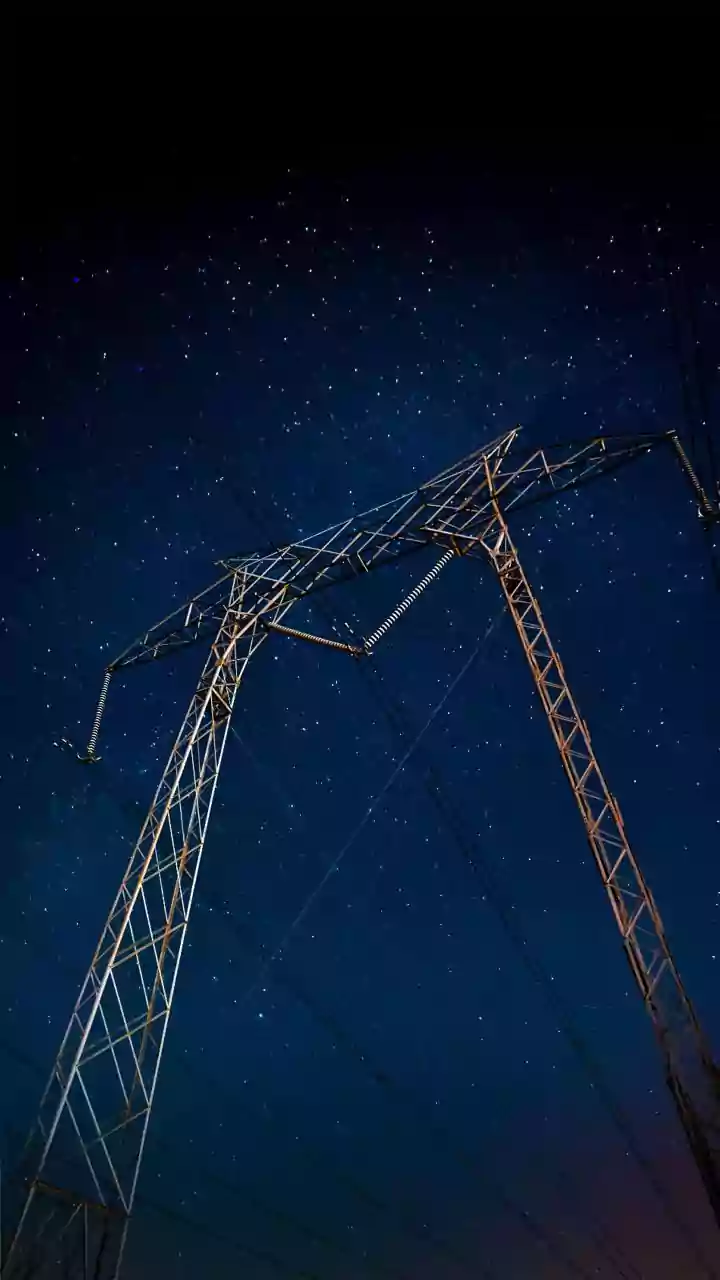
When a CME slams into Earth's magnetic field, it triggers a geomagnetic storm. This celestial event is responsible for the beautiful auroras, but it also has a dark side. The storm's interaction with our planet's magnetosphere induces powerful, low-frequency electrical currents on the Earth's surface. These are known as geomagnetically induced currents, or GICs. While harmless to humans, these currents seek out paths of least resistance—like long, conductive networks. Our sprawling high-voltage power grids are, in effect, giant antennas for this disruptive energy.
The Grid's Kryptonite: Fried Transformers
Power grids are designed to handle alternating current (AC), but GICs are a form of direct current (DC). When these rogue currents flow into the large transformers at substations, they can cause the transformer's magnetic core to become saturated. This leads to rapid, extreme overheating, harmonic distortions, and voltage instability across the grid. In a worst-case scenario, the transformers can be permanently damaged or destroyed. This is not a theoretical problem. In 1989, a moderate solar storm knocked out power to Quebec for nine hours, and the historic Carrington Event of 1859 caused telegraph systems to spark and fail. A similar event today could cause blackouts lasting weeks or months.
Fighting Back with Forecasts
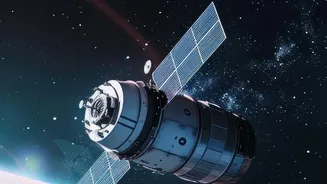
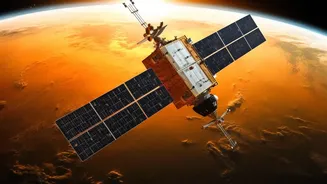
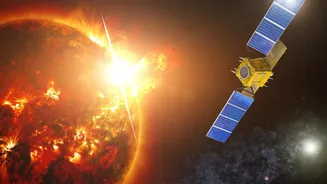
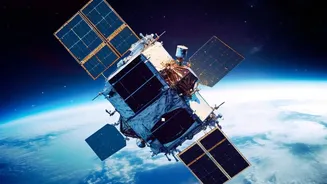
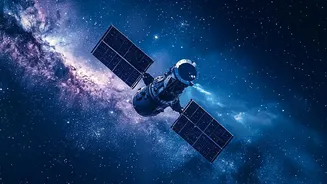
This is where modeling becomes our most crucial defense. Scientists can't stop a CME, but they can predict its arrival and intensity. Using data from a fleet of solar observatories like NASA's SOHO and STEREO spacecraft, researchers create sophisticated 3D models of the eruption. These models forecast the CME's trajectory and speed, giving us a one to three-day warning. As the CME gets closer, spacecraft stationed between the sun and Earth provide real-time data on its magnetic field strength and density. This information is fed into powerful computer simulations that predict how severe the resulting geomagnetic storm will be on the ground.
From Warning to Action
An accurate forecast is the key that unlocks a toolbox of protective measures for grid engineers. With hours of warning, utility operators can take defensive actions that would be impossible otherwise. They can reroute power flows to reduce stress on the most vulnerable parts of the grid, postpone non-essential maintenance, and bring extra generation capacity online to stabilize voltage. In some cases, they can preemptively take highly critical transformers offline for the storm's duration to prevent damage. Some utilities are also installing physical hardware, like neutral blocking devices, which act as a block against GICs flowing into transformers. These models effectively turn a surprise solar punch into a predictable event, allowing the grid to brace for impact.