




Start With a Plan
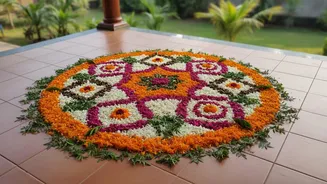
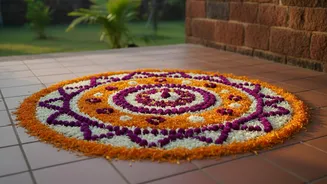
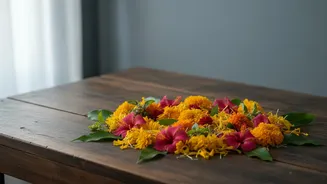
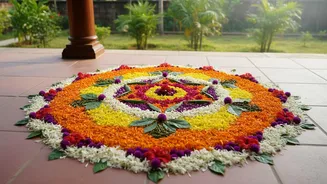
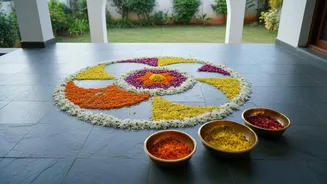
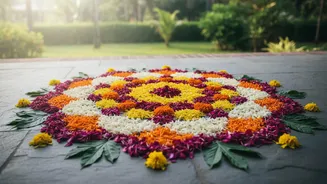
Before you head to the flower market, the most crucial step is to have a clear plan. A beautiful pookkalam doesn't happen by chance; it begins with a design. Decide on the size and complexity you're aiming for. Traditionally, the pookkalam starts small
on the first day, Atham, with a single ring of yellow or white flowers, and grows larger each day, culminating in a grand design on Thiruvonam. This progressive approach is your secret weapon against overbuying. For the first few days, you'll only need a small quantity of specific flowers. Instead of buying everything at once, you can plan to purchase flowers in stages. Sketch your design on paper first. Mark out the different sections and decide which colours will go where. This simple act of visualisation will help you avoid impulse buys and stick to what you actually need.
Know Your Blooms
Not all flowers are created equal when it comes to covering space. Understanding the properties of common pookkalam flowers can save you a significant amount of money. Marigolds (jamanthi) and chrysanthemums are excellent for filling large areas with vibrant colour and are often more affordable. Their petals are dense and provide great coverage. On the other hand, flowers like roses, while beautiful, are better used for accents and details rather than bulk filling. Traditional flowers like thumba (Ceylon slitwort), chethi (ixora), and shankupushpam (butterfly pea) add authenticity and unique textures. Consider using readily available leaves to create borders or green sections, which can be a cost-effective way to add contrast and volume to your design. Planning your flower types based on their function—filler, outline, or accent—is key to an efficient shopping list.
The Estimation Game
Estimating quantity is often the biggest challenge. There's no single magic formula, but a good strategy is to think in terms of area. Once you have your design sketched out, identify the dominant colours that will cover the largest sections. You will need to buy more of these flowers. Flowers for smaller, accent rings or intricate details can be purchased in much smaller quantities. For loose petals like marigolds or chrysanthemums, think in terms of weight (grams or kilograms) relative to the circle's diameter. For stringed flowers like jasmine (mullapoo), you might measure by length (muzham). It's better to slightly underestimate for your first shopping trip, especially if you plan to add layers daily. You can always do a small top-up trip later, which is preferable to having a large surplus of wilting flowers.
Smart Shopping Strategies
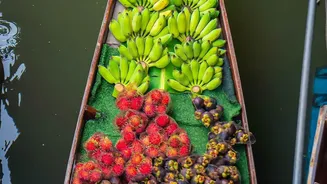
The Onam season sees a surge in flower demand and prices. To get the best value, timing and location matter. Visiting local flower markets early in the morning often yields the freshest blooms at better prices. If you live in an apartment complex or a close-knit community, consider pooling your flower purchases with neighbours. Buying in bulk can sometimes lead to better rates, and you can all share the bounty. Don't overlook the flowers growing in your own garden or neighbourhood. Traditional pookkalams were made with locally available flowers. Using hibiscus (chemparathy), lantana (kongini), or butterfly pea flowers from your surroundings can add a personal touch and reduce your shopping list.
Make Your Flowers Last
Extending the life of your flowers means buying less in the long run. While some purists prefer using fresh petals each day, you can reuse certain flowers like marigold and chrysanthemum petals if they are preserved correctly. Once you've separated the petals, store them in a cool place. A light mist of water can help keep them fresh and vibrant for longer. Avoid direct sunlight on your pookkalam, as it can cause the flowers to wilt and fade quickly. When you lay the design, start from the centre and work your way outwards to avoid disturbing the arranged petals. By taking these small steps to preserve freshness, you ensure your pookkalam looks stunning throughout the celebrations without needing a complete and costly overhaul every single day.