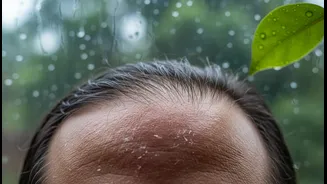










The Science of Monsoon Scalp Issues
Before diving into the mistakes, it helps to understand what's happening up there. During the monsoon, the air is saturated with moisture. This high humidity has a twofold effect: it causes your hair shaft to swell, making it frizzy and weak, and it creates
a warm, damp environment on your scalp. This encourages your scalp to produce more oil and sweat. This combination of excess moisture, oil, and sweat creates the perfect breeding ground for fungus and bacteria, leading to common issues like dandruff, itchiness, and even fungal infections. Pollutants in rainwater can also disrupt your scalp's natural pH balance, further aggravating the situation.
Mistake 1: Tying Up Wet or Damp Hair
It’s tempting to tie your hair up and get on with your day, especially when it takes forever to dry in the humid climate. However, this is one of the biggest mistakes you can make. When you tie up wet hair, you trap moisture against your scalp. This creates a dark, damp, and warm environment that is ideal for fungal growth, leading to dandruff and other scalp infections. Hair is also at its weakest when wet, and tying it tightly can cause significant breakage and hair fall. Always ensure your hair and scalp are completely dry before you tie it into a bun or ponytail.
Mistake 2: Over-Oiling or Using Heavy Oils
While oiling is a cherished hair care tradition, your approach may need to change during the monsoon. Heavy oils like castor or even thick coconut oil can be too much for a scalp that is already over-producing sebum due to humidity. This excess oil can mix with sweat and dirt, clogging your hair follicles, which leads to issues like scalp acne, increased dandruff, and hair fall. Furthermore, leaving oil on overnight might do more harm than good in this season. If you wish to oil your hair, opt for lighter, non-greasy oils like jojoba or argan, apply it for just an hour or two before washing, and focus on the lengths rather than drenching your scalp.
Mistake 3: Skipping Washes After Getting Drenched
Getting caught in a sudden downpour can be romantic, but the aftermath for your hair is anything but. Rainwater isn't pure; it carries pollutants and dust from the atmosphere which can settle on your scalp. This residue can irritate the skin, disrupt its natural balance, and make your hair feel greasy and limp. Failing to wash your hair soon after getting wet in the rain allows these impurities to sit on the scalp, increasing the risk of infections. Make it a rule to cleanse your hair with a mild shampoo as soon as you get home after being in the rain to keep your scalp clean and healthy.
Mistake 4: Using Heavy Styling Products and Too Much Heat
Fighting monsoon frizz with heavy, creamy serums or mousses can be counterproductive. These products can weigh your hair down and add to the buildup on your scalp, especially in a humid environment. This can lead to clogged follicles and an even greasier feeling. Instead, opt for lightweight, water-based anti-frizz serums. Similarly, while you might be tempted to use a straightener or blow dryer to tame unruly hair, excessive heat styling can further damage hair that is already fragile and porous from the humidity. It's best to embrace your natural texture, use protective hairstyles like loose braids, and limit heat tools.
Mistake 5: Infrequent or Aggressive Washing
Finding the right washing frequency is key. Some people overwash their hair daily, stripping the scalp of its natural oils and causing it to produce even more oil to compensate. Others reduce washing frequency, allowing sweat, oil, and environmental grime to accumulate, which can lead to dandruff and infections. Most dermatologists recommend washing your hair two to three times a week with a gentle, sulphate-free shampoo. If you have a very oily scalp or exercise daily, you might need to wash more frequently with a mild cleanser. Also, avoid aggressive scrubbing with nails, which can irritate the scalp; use your fingertips instead.