







The Modern Student's Secret Weapon
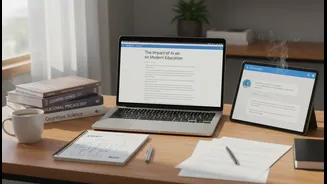
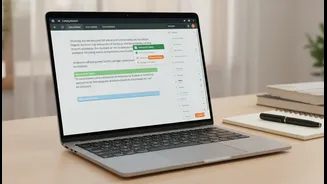
Forget the simple spellcheckers of the past. Today's AI self-checking tools are sophisticated writing assistants. Platforms like Grammarly, QuillBot, and Paperpal go far beyond correcting typos. They function as real-time editors, offering suggestions
on grammar, clarity, sentence structure, and tone. These tools can rephrase awkward sentences, suggest stronger vocabulary, and ensure a consistent style, acting as a digital co-pilot for students navigating complex academic writing tasks. Unlike older software, many of these new tools are designed specifically for academic and research writing, understanding the need for formal tone and structured arguments.
Surviving the Academic Pressure Cooker
A key reason for the surge in popularity is the intense academic pressure students face. Heavy workloads, tight deadlines, and the drive for high marks create a stressful environment. For many students in India, especially those for whom English is a second language, the challenge is twofold: mastering the subject matter and articulating it flawlessly in academic English. AI tools offer a crucial support system. They provide instant, private feedback, helping students build confidence and improve their writing without the anxiety of waiting for a professor's review. This immediate assistance can significantly reduce the stress associated with writing assignments, allowing students to focus on their ideas rather than getting stuck on mechanics.
More Than a Crutch, A Learning Aid
While some view these tools as a shortcut, many students use them as a genuine learning aid. Effective AI assistants don't just fix errors; they explain the reasoning behind the corrections. This provides a valuable, personalized learning experience, helping students understand and internalize grammar and style rules over time. They can identify a student's recurring mistakes, offering targeted practice to address specific weaknesses. By using AI to brainstorm ideas, structure arguments, and refine drafts, students can learn to engage more deeply with their own writing process, turning a passive task into an active exercise in improvement.
The Fine Line: Helper vs. Cheater
The rise of these tools brings a critical ethical question: where is the line between a helpful assistant and a tool for academic dishonesty? Using an AI to polish grammar and improve clarity is widely seen as acceptable, similar to asking a friend to proofread a paper. However, using generative AI to write entire paragraphs or essays from a simple prompt crosses into plagiarism territory. This is because plagiarism is about submitting work that is not your own, and AI-generated text is not the student's original intellectual output. It’s a distinction that students and universities are now forced to confront directly.
How Universities in India Are Responding
Universities across India are grappling with this new reality. As of 2026, many institutions have not yet created formal, standalone AI policies. Instead, they are applying existing academic integrity principles, which broadly define plagiarism as submitting work you did not create. The University Grants Commission (UGC) has advised universities to develop their own policies, emphasizing that students are fully responsible for their submitted work and must disclose any AI assistance. Some institutions, like the IITs and National Law University Delhi, have already introduced specific guidelines, requiring disclosure of AI tools and making it clear that while AI can be used for assistance, it cannot replace the student's original thought. The consensus is clear: use AI to help you write better, but do not let it write for you.