
The Icy Enigma of Europa
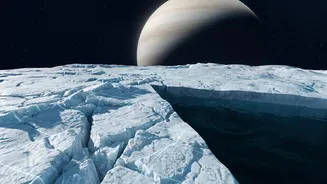
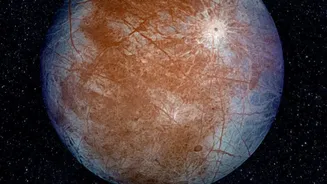
For decades, Europa has been one of the most tantalizing targets in our solar system for finding life beyond Earth. Scientists have strong evidence that a global ocean, potentially containing twice as much water as all of Earth's oceans combined, is hidden
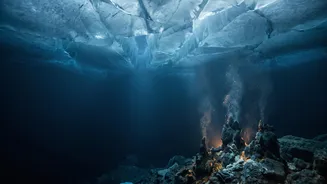
beneath an ice shell of unknown thickness. This ocean is believed to be in direct contact with a rocky seafloor, creating the potential for hydrothermal vents—environments that teem with life in the deep, dark oceans of our own planet. However, confirming the ocean's existence and assessing its habitability has been impossible. The thick, frozen crust, estimated to be miles deep, stands in the way, obscuring a direct view of the world beneath.
A Radar Like No Other: Meet REASON
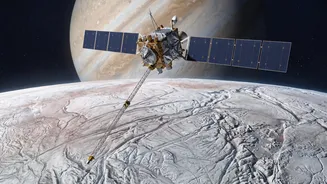
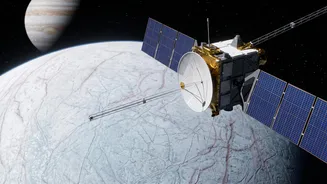
Enter the Radar for Europa Assessment and Sounding: Ocean to Near-surface, or REASON. This instrument is the star of Europa Clipper’s science suite. Unlike other instruments that study the surface or particles, REASON is the only one designed to look directly through the ice. Developed by teams at NASA's Jet Propulsion Laboratory and university partners, this sophisticated instrument is based on technology originally used to study the massive ice sheets of Antarctica and Greenland here on Earth. By adapting this technology for space, NASA has equipped the Clipper spacecraft with an unprecedented ability to perform a kind of planetary-scale ultrasound, creating a 3D map of the ice shell and what lies beneath.
Peering Through Miles of Ice
The revolutionary aspect of REASON lies in its dual-frequency radar system. It uses both high-frequency (HF) and very-high-frequency (VHF) radio waves to probe the ice. The lower frequency waves (9 MHz) are designed for deep penetration, capable of reaching as far as 18 miles (30 kilometers) down to search for the ice-ocean boundary. The higher frequency waves (60 MHz) provide a high-resolution view of the upper portions of the ice, mapping its structure and looking for pockets of trapped liquid water. By analyzing the time it takes for these radio signals to bounce back and the strength of their return, scientists can distinguish between solid ice and liquid water. This dual approach allows REASON to not only confirm the ocean's existence but also to measure the thickness of the ice shell and identify potential lakes or channels within it—features that could be crucial for transporting materials between the surface and the ocean.
A Successful First Test and Future Promise
The Europa Clipper mission, which launched in October 2024, has already given scientists a taste of REASON's capabilities. During a gravity-assist flyby of Mars in 2025, the team successfully tested the instrument, verifying that it was working perfectly. This test was critical because the full capabilities of the radar's 'echo' could only be performed in space. The successful test gives immense confidence for when the spacecraft finally arrives in the Jupiter system in April 2030. Over nearly 50 planned flybys of Europa, some as close as 25 kilometers from the surface, REASON will systematically scan the moon. The data gathered will not just be a simple confirmation of water; it will revolutionize our understanding of icy worlds by revealing the internal dynamics of Europa's shell, providing clues about its geological history and, most importantly, assessing whether conditions are suitable for life.
The Dawn of a New Ocean Age
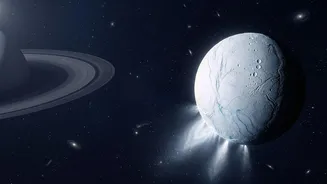
While Europa Clipper is not a life-detection mission itself, the information provided by REASON is the critical next step in the search. By identifying the most promising locations—perhaps where the ice shell is thinnest or where subsurface water pockets exist—it will pave the way for future lander missions. The instrument’s ability to find pathways for chemical exchange between the surface and the ocean is key, as this is essential for a habitable environment. The insights from REASON will transform our models not just of Europa, but of other ocean worlds believed to exist across the solar system and beyond, from Saturn's moon Enceladus to distant exoplanets. It marks a shift from speculating about deep space oceans to actively mapping them.