




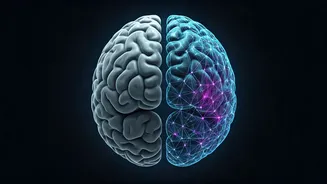


Beyond Automation to Augmentation
The most immediate benefit of AI in the workplace is its ability to handle repetitive, data-heavy tasks with incredible speed and efficiency. This frees up human employees from mundane work like basic reporting, data entry, and scheduling, allowing them
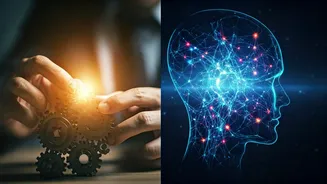
to focus on higher-value activities. Instead of viewing AI as a tool for simple automation, smart employers are treating it as a way to augment their workforce. By letting AI handle the logistical heavy lifting, the human brain is freed to engage in strategic thinking, innovation, and complex problem-solving. This partnership allows organizations to boost productivity while creating more meaningful and engaging work for their human teams.
The Irreplaceable Value of Emotional Intelligence
While AI can process data, it cannot replicate the nuances of human emotion. Emotional intelligence (EQ)—the ability to recognize, understand, and manage emotions in oneself and others—is becoming a key differentiator in the modern workplace. Skills like empathy, communication, and relationship-building are essential for leadership, teamwork, and customer relations. An AI chatbot can answer routine questions, but a human agent is needed to handle a frustrated customer with empathy and build trust. Leaders with high EQ are better equipped to manage teams through the uncertainty of technological change, fostering resilience and psychological safety. As AI takes on more technical roles, these distinctly human skills are what drive collaboration, engagement, and customer loyalty.
Guarding Against AI’s Inherent Flaws
Despite its power, AI is not infallible. A significant risk is the phenomenon of "hallucinations," where an AI confidently produces false or fabricated information. These errors occur because AI models are designed to predict the next most probable word, not to verify truth. They can range from minor factual errors to entirely made-up legal precedents or financial data, posing serious risks to businesses. Furthermore, AI systems can reflect and amplify biases present in their training data, leading to skewed or unfair outcomes in areas like hiring. Human oversight is essential to act as a critical filter, verifying AI-generated content, spotting biases, and ensuring that decisions align with ethical standards and real-world context. Without a human in the loop, companies risk reputational damage, compliance violations, and poor decision-making.
Driving True Creativity and Innovation
AI is a powerful tool for analyzing existing data and identifying patterns, but it cannot replicate genuine human creativity. True innovation often comes from thinking outside the box, asking novel questions, and connecting disparate ideas—abilities that are hallmarks of human ingenuity. AI can act as a creative partner, generating a first draft or analyzing market data, but it requires a human to provide the strategic insight, interpret the results, and craft a truly original campaign or solution. For example, a marketing team can use AI to analyze customer trends, but it's the human creative director who will translate those insights into a compelling brand story. This collaborative approach, blending AI's analytical power with human creativity, is where breakthrough ideas are born.