








The Rise of the ‘Health Halo’
How did fruit juice get its glowing reputation? For generations, it was marketed as a convenient and child-friendly source of vitamins, particularly Vitamin C. Think of all those ads showing fresh oranges being squeezed directly into a carton. This created
a powerful ‘health halo’ around juice, positioning it as a wholesome alternative to fizzy drinks. In the past, when concerns about fat were at their peak, fat-free juice seemed like an obvious good choice. It was seen as a pure, natural product straight from the fruit. This perception was so strong that many of us grew up believing juice and whole fruit were nutritionally interchangeable. But as nutritional science has evolved, the focus has shifted from single nutrients (like Vitamin C) to the food’s overall effect on the body, which is where the halo begins to fade.
The Sugar Problem Without The Fiber
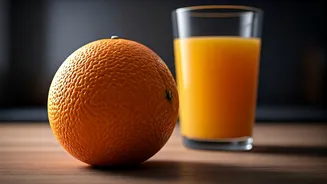
The main reason for the shift in opinion comes down to two words: sugar and fiber. When you eat a whole orange, you consume its natural sugars, but they are packaged within a fibrous structure. This fiber slows down digestion and the absorption of sugar into your bloodstream, preventing a rapid spike in blood sugar. Your body has to work to break down the fruit’s cells to release the sugar. When you drink a glass of orange juice, however, that work has already been done for you. Juicing strips away the fiber, pulp, and membranes, leaving you with what experts now call ‘free sugars’. Your body absorbs this liquid sugar almost instantly, causing a sharp rise in blood sugar and insulin levels, similar to what happens when you drink a soda. A single 250ml glass of unsweetened orange juice can contain around 20-25 grams of sugar—nearly the same amount as a can of cola.
Your Body Can’t Tell The Difference
From a metabolic standpoint, your liver doesn't distinguish between the sugar from a glass of apple juice and the sugar from a sugar-sweetened beverage. It’s all processed in a similar way. This rapid influx of fructose (the main type of sugar in fruit) can overwhelm the liver. Over time, a high intake of free sugars from any source, including 100% fruit juice, is linked to an increased risk of health issues like weight gain, type 2 diabetes, and non-alcoholic fatty liver disease. The satiety signals are also different. The fiber and act of chewing a whole fruit help you feel full. It's easy to drink the equivalent of three or four oranges in a single glass of juice in under a minute, consuming hundreds of calories without feeling satisfied. You’d be unlikely to eat four whole oranges in one sitting.
What About The Vitamins?
Advocates for juice will correctly point out that it does contain vitamins and antioxidants. A glass of 100% orange juice is indeed a good source of Vitamin C and potassium. However, experts now argue that the nutritional cost of the high sugar load outweighs these benefits, especially when those same nutrients are readily available in whole fruits without the negative side effects. Many national health guidelines, including those in the UK and US, now recommend limiting fruit juice consumption. If you do drink it, the advice is to stick to a small glass (around 150ml) per day and count it as only one of your recommended daily fruit and vegetable servings, no matter how much you drink. For children, the recommendations are even stricter, with many paediatricians advising water and milk as primary drinks.