




Why Proper Storage Is Non-Negotiable
The secret to a long-lasting sweater lies in how it’s treated when you aren't wearing it. Wool and other knit fibres are constructed from interlocking loops, which gives them their signature stretch and comfort. However, this structure is also vulnerable.
When stored improperly, gravity and pressure become enemies. Hanging a heavy knit sweater causes the weight of the garment to pull downwards, permanently stretching the shoulder and neck areas and leaving unsightly bumps from the hanger. Stacking sweaters incorrectly can crush the delicate fibres, leading to deep creases and a loss of that plush, airy texture that makes them so comfortable.
The Golden Rule: Fold, Don't Hang
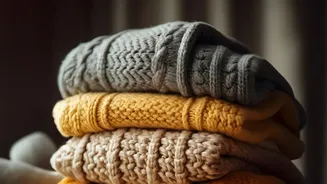
The single most impactful change you can make to preserve your knitwear is to fold it instead of hanging it. Folding distributes the weight of the sweater evenly, preventing the stress points that hangers create. While it might be tempting to hang lightweight cardigans, folding is always the safest bet for natural fibres like wool, merino, and cashmere. If you absolutely must hang a sweater due to space constraints, there is a specific technique: fold the sweater in half vertically, place the hanger hook in the armpit area, and then drape the body and sleeves over the hanger bar. This method supports the sweater's weight more evenly than traditional hanging.
The Art of the Perfect Fold
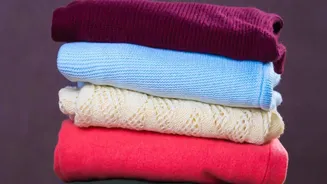
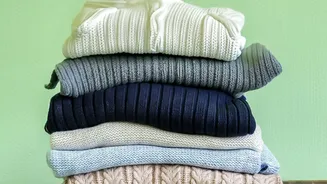
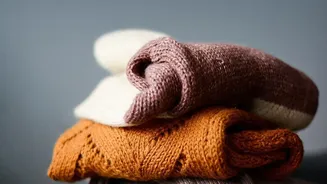
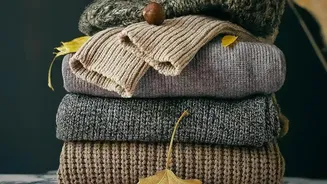
Not all folds are created equal. A simple fold down the middle can create a hard crease on the front of the garment. A better method is to lay the sweater face down on a flat, clean surface. Fold one arm and about a third of the sweater's body towards the centre. Repeat with the other side to create a neat rectangle. From there, fold the bottom hem up to meet the neckline. For drawer storage, you can fold it once more to create a compact, stackable parcel that can be stored vertically, allowing you to see all your sweaters at a glance without unstacking them.
Creating a Safe Haven for Seasonal Storage
When it's time to put your winter woollens away for the season, a few extra steps are crucial. First, always clean your garments before storing them. Moths and other pests are attracted to natural body oils, sweat, and food particles left on the fabric. Dry cleaning or hand washing according to the care label is your first line of defence. Ensure every item is completely dry before packing it away to prevent mildew and musty odours. Store the clean, folded sweaters in a cool, dark, and dry place. Attics and basements, which often have extreme temperature fluctuations and humidity, should be avoided. These conditions can damage fibres and encourage pest activity.
Choosing the Right Containers
The container you choose is just as important as the location. While plastic bins may seem practical, they can trap moisture, creating an environment where mildew can thrive. The best options are breathable containers, such as cotton garment bags or canvas bins, which allow for air circulation. If you do use plastic bins, ensure they are not airtight and consider adding silica gel packets to absorb excess moisture. For particularly delicate knits like cashmere, wrapping them in acid-free tissue paper before placing them in a container can provide an extra layer of protection against friction and creasing.
Natural Pest Protection
To deter clothes moths, skip the old-fashioned, chemical-laden mothballs. Their scent is unpleasant and hard to remove from fabric. Instead, opt for natural deterrents like cedar blocks, lavender sachets, or rosemary. These natural repellents create a scent that moths dislike, protecting your precious woollens while leaving them smelling fresh. Place them in your drawers or storage bins, but avoid direct contact with the garments as the oils can sometimes stain. Remember to refresh cedar blocks by lightly sanding them and replace sachets periodically to maintain their effectiveness.