





The Doordarshan Era: A Nation Tunes In Together
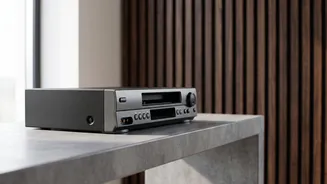
For those who grew up in the 1980s, entertainment was a singular, national event. Doordarshan, the state-owned broadcaster, was the only channel, and its programming created a rare, shared cultural experience. It began modestly in 1959 as an experimental
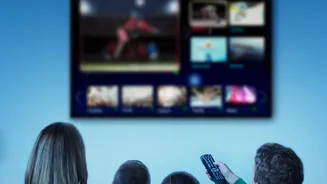
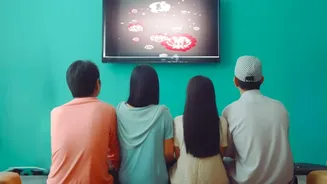
service in Delhi, primarily focused on education. But by the 80s, it had become the nation's primary source of entertainment. The introduction of colour television in 1982 for the Asian Games was a major milestone. This was the era of Sunday morning silence on the streets, as entire neighbourhoods gathered to watch the epic sagas of 'Ramayan' (1987) and 'Mahabharat' (1988). These shows weren't just television; they were a cultural phenomenon, uniting millions in a weekly ritual. Appointment viewing wasn't a choice; it was the only way, fostering a sense of community around the television set.
The Satellite Boom: A Window to the World
The 1990s shattered the single-channel reality. The arrival of private satellite television, starting with STAR TV and the launch of Zee TV in 1992, was a revolution. Suddenly, from one channel, Indian homes had access to dozens. This explosion of choice forever changed what and how Indians watched. Cable operators mushroomed across the country, wiring homes into a new world of 24/7 entertainment, from music on MTV to a variety of Hindi serials. This shift marked the beginning of fragmentation. The national, unified audience of the Doordarshan era began to break apart into smaller groups, each with their own preferred channels and shows. Entertainment was no longer just a national broadcast; it was becoming a consumer choice.
The Reign of the Soaps: The 'Saas-Bahu' Saga
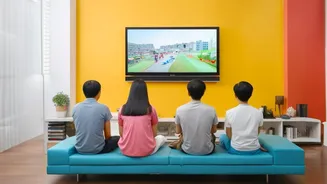
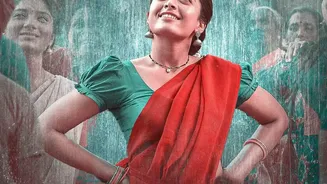
The 2000s can be defined by two words: 'saas' and 'bahu'. This was the decade of the daily soap opera, an era dominated by producers like Ekta Kapoor. Serials like 'Kyunki Saas Bhi Kabhi Bahu Thi' and 'Kahaani Ghar Ghar Kii' became staples in most households. These shows, with their dramatic plot twists, elaborate family functions, and often regressive portrayal of women, created a new form of appointment viewing. The plots were aspirational, set in opulent homes, yet the family conflicts were relatable to many. For better or worse, these serials had a massive cultural impact, influencing everything from fashion to family dynamics. The viewing experience was still largely communal, with families gathering in living rooms each night, but the content itself was hyper-focused on a specific genre of domestic drama.
The Streaming Revolution: My Content, My Screen, My Time
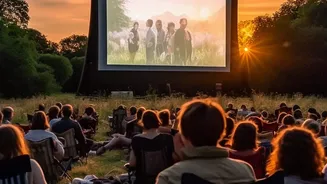
The most profound shift came in the last decade with the rise of Over-the-Top (OTT) platforms. The widespread availability of affordable smartphones and cheap data plans, catalyzed by the launch of Reliance Jio in 2016, created the perfect storm for a streaming explosion. Global giants like Netflix and Amazon Prime Video entered the market, competing with homegrown players like Hotstar (now Disney+ Hotstar), ZEE5, and Sony LIV. This changed everything. The communal living room TV was replaced by the personal mobile screen. 'Appointment viewing' gave way to 'binge-watching'. Content became hyperlocal, global, and niche all at once, catering to individual tastes rather than family consensus. This shift from a shared, single-screen experience to a fragmented, multi-screen, on-demand world is the final step in a long journey. The battle for eyeballs has moved from the living room to the palm of our hands.