


The ISS: A Monument of a Bygone Era
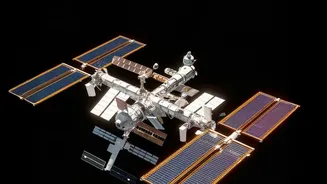
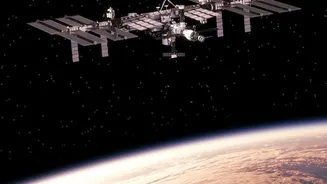
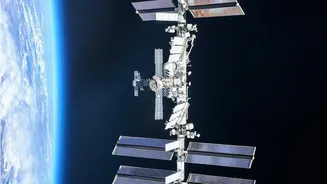
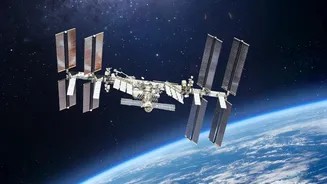
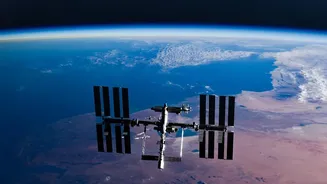
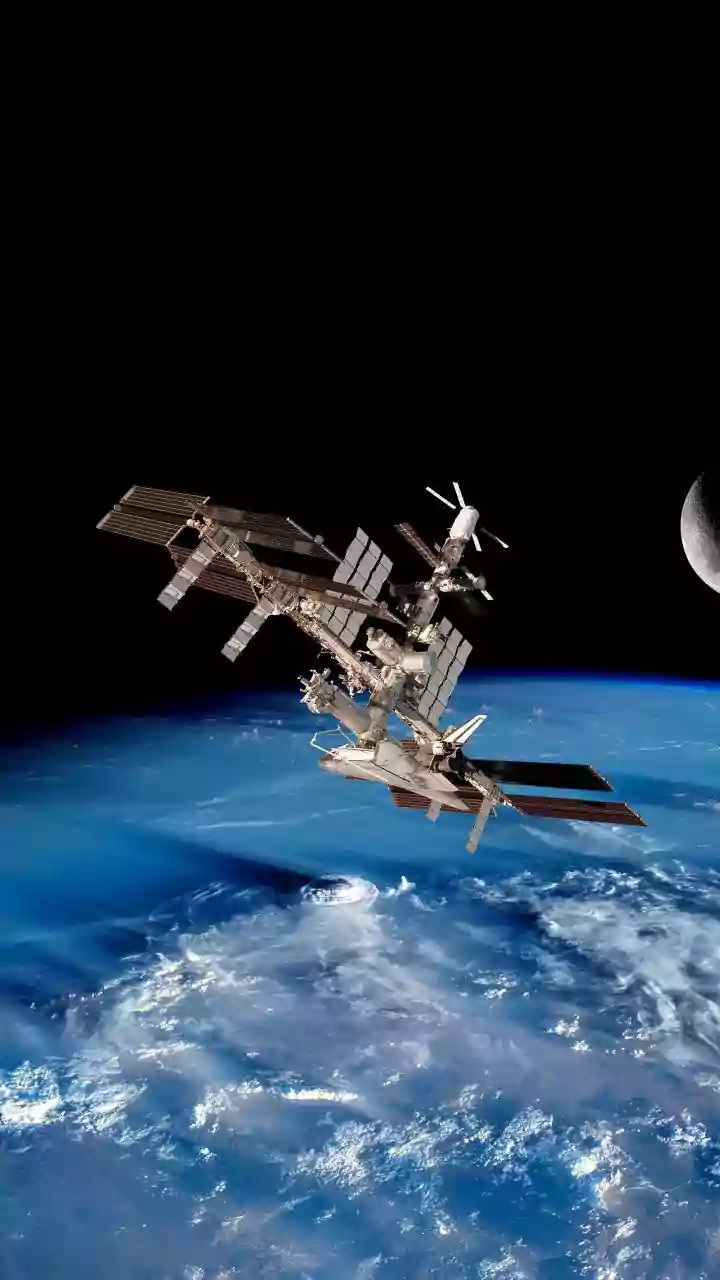
The International Space Station (ISS) stands as one of humanity's greatest engineering achievements. A sprawling, multinational collaboration that has been continuously crewed for over two decades, it has hosted thousands of scientific experiments and pushed
the boundaries of human endurance. But it was also a product of its time: a massive, multi-billion-dollar government project built piece-by-piece over many years. Its architecture, while groundbreaking, was monolithic and expensive to maintain. As the ISS heads for a planned retirement in the early 2030s, the model for living and working in space is undergoing a radical transformation. NASA is shifting its role from being the landlord of low-Earth orbit to becoming a tenant, purchasing services from a new class of commercial operators.
A New Space Race Fueled by Commerce
Enter the commercial pioneers. Companies like Axiom Space, Blue Origin with its Orbital Reef concept, and the Starlab consortium are leading the charge to build privately owned and operated space stations. Unlike the ISS, which was built primarily for science and international cooperation, these new orbital outposts are designed as 'mixed-use business parks' in the sky. Their success depends not just on technical feasibility, but on economic viability. They must attract a diverse range of customers, from space agencies and research institutions to space tourists and in-space manufacturers. This commercial pressure—the need to be cost-effective, flexible, and responsive to market demands—is the primary catalyst for rapid innovation.
Breakthroughs Born from Business Needs
The mandate to build a sustainable business in orbit is forcing a complete rethink of station design. Instead of one-size-fits-all, the new architecture is modular and scalable. Blue Origin's Orbital Reef, for example, is designed with an open system architecture allowing various customers to link up and expand the station as market demand grows. Sierra Space is developing expandable LIFE habitats, soft-goods modules that launch in a compressed state and inflate in orbit, offering a massive volume for a fraction of the launch mass. This modular 'plug-and-play' approach is a dramatic departure from the rigid construction of the ISS. The Starlab venture, a partnership including Voyager Space and Airbus, is taking a different approach, designing a station that can be launched in a single flight, dramatically simplifying assembly.
Designing for Profitability and Progress
Every aspect of these new stations is being optimized for efficiency. To reduce the immense cost of resupply missions, developers are focused on advanced and regenerative life support systems. Onboard robotics and AI-driven predictive maintenance are being incorporated to reduce the reliance on complex and risky spacewalks for upkeep, freeing up crew time for revenue-generating research and manufacturing. Companies are also pioneering in-space manufacturing facilities, hoping to produce everything from flawless fiber optics and semiconductors to 3D-printed biological materials that can only be made in microgravity. Axiom Space is even developing orbital data centers to support the growing need for in-space cloud computing and secure data processing. These aren't just scientific curiosities; they are foundational technologies for a self-sustaining low-Earth orbit economy.
NASA's New Role as an Anchor Tenant
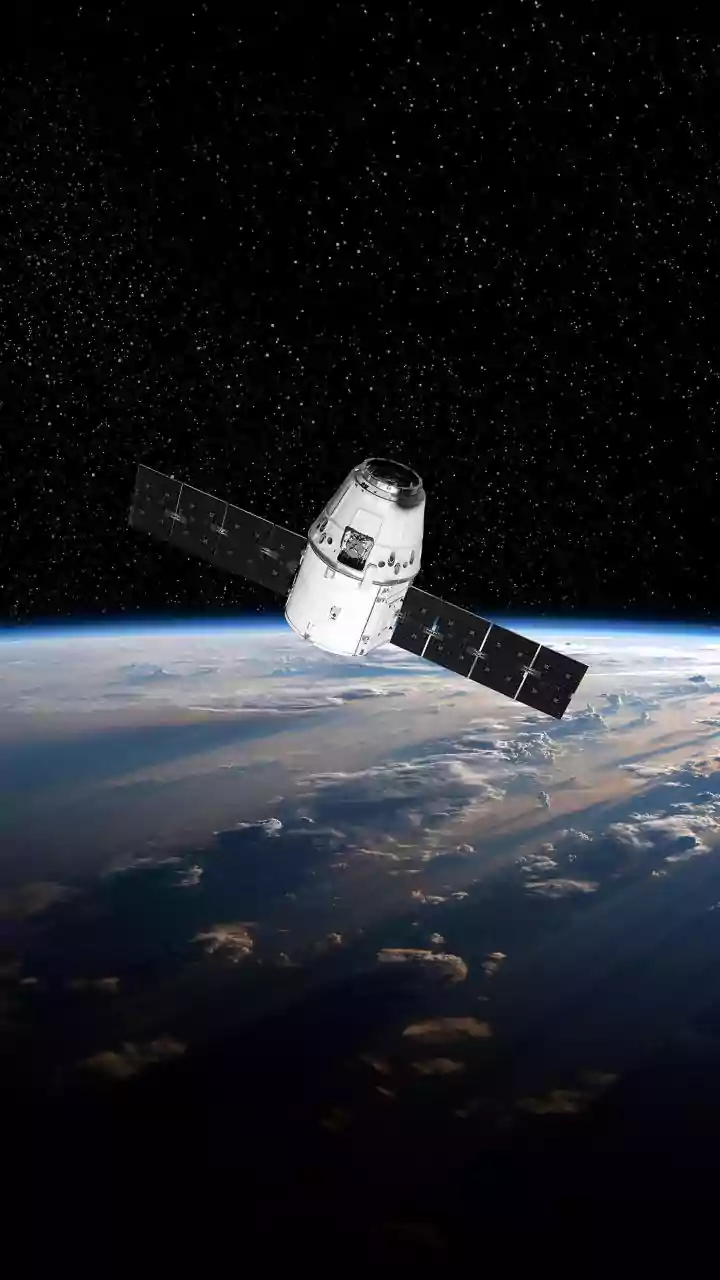
This boom in private innovation isn't happening in a vacuum. It is being actively encouraged and funded by NASA through its Commercial Low Earth Orbit Destinations (CLD) program. By awarding contracts and providing technical support, NASA is acting as an anchor customer for these new stations. This guarantees a baseline of revenue, giving companies the financial stability to invest in long-term technological development and attract other commercial clients. It's a proven model, echoing the success of the Commercial Crew and Cargo programs that enlisted companies like SpaceX to service the ISS, ultimately lowering costs and fostering a competitive market. NASA's commitment ensures it will have continued access to a laboratory in orbit, while freeing up its own resources to focus on ambitious deep-space missions to the Moon and Mars.