



The Constant Hunt for a Charger
Fitness trackers and smartwatches have become indispensable parts of modern life, monitoring everything from our steps to our sleep patterns. Yet, they all share a common weakness: the battery. The daily or weekly ritual of removing your device and plugging
it in is a persistent inconvenience. For all their advanced capabilities, these gadgets are still tethered to a power cord. This reliance on batteries limits their potential, especially for continuous, long-term health monitoring where a dead device means a gap in crucial data. The industry has been searching for a better way, a solution that could make charging obsolete. That solution is now emerging from the world of material science.
The Science of Body Power
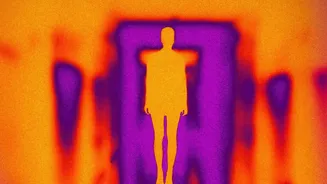
The magic behind this technology is a scientific principle discovered two centuries ago called the Seebeck effect. In simple terms, when there is a temperature difference across a specific type of material, it generates a voltage. Your body is a perfect power source for this phenomenon. Your skin is almost always warmer than the surrounding air. Thermoelectric generators (TEGs) exploit this constant temperature difference to create a small but steady stream of electrical energy. The heat from your body flows through the thermoelectric material to the cooler, outer side, and this movement of heat energy is converted directly into electricity.
From Rigid Modules to Flexible Fabrics
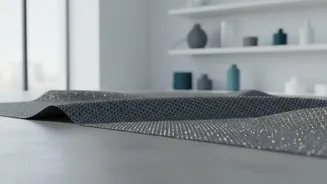
For years, thermoelectric generators were rigid, brittle blocks, making them unsuitable for clothing. The breakthrough came when scientists figured out how to integrate thermoelectric properties into flexible, wearable materials. Instead of solid chunks of material, researchers developed conductive polymers and inks that can be coated or printed onto threads and fabrics. Early research in the 2000s involved attaching stiff modules to textiles, but recent advancements around 2015 led to printable thermoelectric pastes and even yarns with these properties woven directly into them. This allows the creation of smart textiles that are breathable, stretchable, and comfortable enough to wear against the skin, all while silently generating power.
Powering the Next Generation of Wearables
The amount of power generated is still relatively small, typically in the range of microwatts to milliwatts per square centimetre. While this may not be enough to power a smartphone, it is sufficient for many low-power electronics, including a growing number of fitness trackers and health sensors. The goal isn't to generate a massive charge, but to provide a constant trickle of energy that continually tops up the device's battery. Some companies have already brought body-heat-powered smartwatches to market, demonstrating the real-world viability of the technology. These devices often combine thermoelectric generation with solar power to ensure they remain charged under various conditions.
The Road to a Chargeless Future
Despite the exciting progress, several challenges remain before you can buy a thermoelectric shirt off the rack. The primary hurdle is efficiency and cost. The materials used, like bismuth telluride, can be rare and expensive, and the power output is still modest for more energy-hungry devices. Researchers are actively exploring new materials, including organic compounds and nanostructures, to boost performance and lower production costs. Another significant challenge is durability. Any smart fabric must be able to withstand regular wear and washing without losing its power-generating capabilities. Recent studies have shown promising results, with some thermoelectric threads retaining most of their conductivity even after multiple wash cycles.