




What Exactly Is the PJ.2.1 Variant?
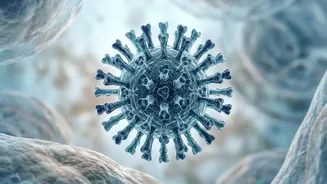
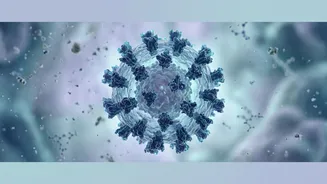
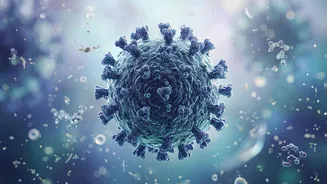
PJ.2.1 is a new sub-variant of SARS-CoV-2, the virus that causes COVID-19. It descends from the JN.1 family, a group of Omicron sub-lineages that has been dominant globally for some time. Scientists have described PJ.2.1 as a 'saltation variant', which
means it appeared with a large cluster of new mutations all at once, rather than evolving gradually. This evolutionary leap, particularly in the virus's spike protein, is what has drawn the attention of health officials. The spike protein is what the virus uses to latch onto and enter human cells.
Where Has It Been Detected?
The first confirmed sample of PJ.2.1 was collected in Ontario, Canada, on May 2, 2026. Since then, it has been identified in several other countries, including the United States, Australia, Spain, France, Israel, Singapore, and New Zealand. In the U.S., it was first found in New York City in late June and has since been reported in multiple states. Wastewater surveillance data from some regions has suggested that PJ.2.1 is spreading relatively quickly. For instance, in Ontario, it accounted for over 25% of sequenced samples in a period between September and October 2026. As of mid-November 2026, public health authorities in India have not confirmed its widespread circulation in the country.
Is It More Dangerous or Transmissible?
This is the key question on everyone's mind. So far, there is no evidence to suggest that PJ.2.1 causes more severe illness, hospitalisations, or deaths than other recent variants. However, some laboratory studies have found that its mutated spike protein may be more efficient at binding to the ACE2 receptor, the 'doorway' the virus uses to enter our cells. This could potentially give it a transmission advantage, but it is important to note that findings in a lab do not always translate to the real world. The World Health Organization (WHO) is monitoring the variant due to its geographical spread but has not classified it as a variant of concern. Experts are urging caution, not panic, noting that a faster-spreading virus is not automatically a more severe one.
What Are the Symptoms?
There are no unique symptoms specifically linked to PJ.2.1. The signs of an infection are consistent with other recent COVID-19 variants and can be easily confused with a common cold or the flu. According to the WHO, common symptoms include fever, sore throat, cough, a runny or blocked nose, headache, muscle aches, and fatigue. Because of this significant overlap, health officials have stressed that only a diagnostic test can confirm whether an illness is COVID-19 or another respiratory virus.
Do Vaccines Still Offer Protection?
Early research offers some reassuring news on this front. Laboratory studies have found that PJ.2.1 does not seem to be substantially better at evading the antibodies generated by updated COVID-19 vaccines. While its numerous mutations were a concern, studies showed that antibodies from vaccinated individuals could still effectively neutralise the PJ.2.1 variant. This indicates that current vaccines should still provide a good level of protection against severe disease, even if they do not completely prevent infection.