





The Symphony in a Humble Bowl
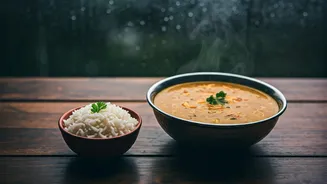
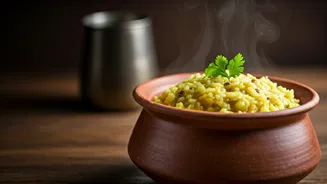
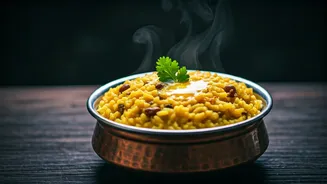
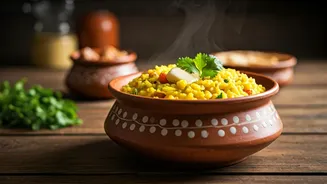
At first glance, Kadhi Chawal seems deceptively simple. It is, after all, just a yoghurt and gram flour (besan) based curry served over steamed rice. But to dismiss it as such is to miss the magic entirely. True bliss lies in the symphony of its components.
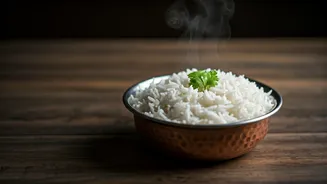
The kadhi itself is a delicate balance of tangy, sour notes from the yoghurt, a gentle heat from ginger and green chillies, and an earthy depth from turmeric and other spices. It’s thickened just enough to lovingly coat each grain of rice, creating a creamy, comforting mouthful. Then there are the pakoras—soft, spongy fritters, usually made from onion and besan, that bob happily in the golden curry. They act as little sponges, soaking up the kadhi’s flavour, ready to release a burst of tangy goodness with every bite. The contrast between the fluffy, separate grains of chawal and the luscious, flowing kadhi is a textural masterpiece.
More Than Food, It's a Feeling
Ask anyone what Kadhi Chawal reminds them of, and the answer is almost always ‘home’. It’s the quintessential ‘Maa ke haath ka khaana’ (food made by a mother’s hands). It is the meal that signifies comfort on a rainy afternoon, the soothing balm for a common cold, and the simple, guaranteed joy at the end of a long week. This dish is woven into the fabric of countless Indian childhoods. It’s not a fancy dish reserved for celebrations; it’s an everyday hero, a dependable source of nourishment for both body and soul. Its power lies in this very simplicity. In a world of complex fusion cuisines and fleeting food trends, Kadhi Chawal remains a constant—a direct line to memories of safety, warmth, and unconditional love.
A Tale of Many Kitchens
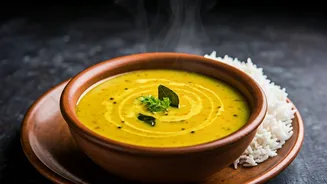
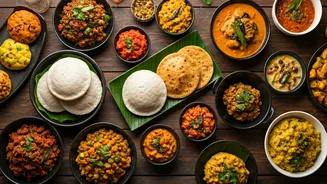
While the soul of Kadhi Chawal is universal, its expression is wonderfully diverse across India. Every region, and indeed every family, has its own unique take on this beloved classic. The popular Punjabi Kadhi is thick, spicy, and almost always features hearty onion pakoras. It’s a robust, flavour-packed version that feels like a complete meal in itself. Travel west to Gujarat, and you’ll find a completely different personality. Gujarati Kadhi is thinner, lighter, and defined by its distinct sweet and sour taste, often perfumed with curry leaves and cinnamon, and typically served without pakoras as part of a larger thali. Meanwhile, the Rajasthani version is known for its fiery kick, using more spices and sometimes omitting yoghurt in favour of buttermilk for a sharper tang. These variations are a testament to the dish’s adaptability, proving that the core concept of a comforting yoghurt curry and rice resonates across diverse culinary landscapes.
The Art of the Perfect Pakora
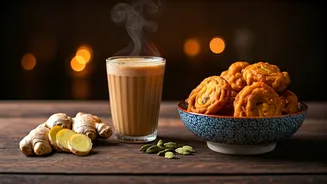
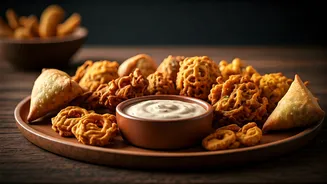
For many aficionados, the quality of the Kadhi Chawal experience hinges on one critical element: the pakora. A great pakora is an art form. It cannot be hard or dense; that would be a criminal offence in the court of comfort food. It must be perfectly soft and porous, allowing it to absorb the surrounding kadhi without disintegrating into a mushy mess. Achieving this requires a well-whisked besan batter, seasoned just right, and fried to a golden perfection before being gently simmered in the finished curry. For many, the joy is in pressing a pakora against the side of the bowl with a spoon, watching it effortlessly yield and meld with the rice and curry. It’s the heart of the dish, adding a substantial, satisfying bite to the otherwise smooth texture.
The Simple Joy of Eating It
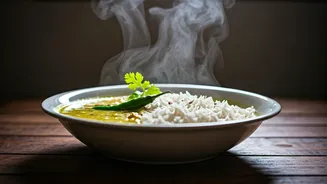
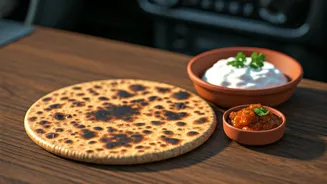
The final piece of the puzzle is the ritual of eating it. Kadhi Chawal is not a dish to be eaten delicately with a fork. It demands a spoon, or better yet, your hands. The act of mixing the bright yellow kadhi into the pristine white rice, ensuring every grain is coated, is part of the pleasure. Some add a dollop of ghee on top for extra richness, while others enjoy it with a side of spicy mango pickle (achar) or a crispy papad for a crunchy contrast. There are no strict rules. The only requirement is to savour it, to let the warm, tangy, and profoundly comforting flavours transport you. It’s a dish that asks for nothing but your quiet enjoyment.