








Why A Sensory Course?
An indoor agility course is more than just a way to burn off energy; it’s a powerful tool for your child's development. Known in child development circles as providing a 'sensory diet,' these activities help kids regulate their bodies and emotions. The
pushing, pulling, crawling, and balancing involved provides two key types of sensory input: proprioceptive (the awareness of one's body in space) and vestibular (related to balance and movement). This input can be incredibly calming for an overstimulated child or energising for a sluggish one. It helps improve motor skills, concentration, and body awareness, all while feeling like pure fun. It transforms your living room from a prison into a playground with a purpose.
Gather Your Household Supplies
The beauty of a DIY agility course is that you don’t need any fancy equipment. Your home is already a treasure trove of supplies. Before you begin, do a quick sweep of the living room or a playroom and gather your building materials. Look for things like: sofa cushions, pillows of all sizes, blankets, dining chairs, a small stool or step, painter's tape (it won't damage floors), laundry baskets, stuffed animals, and any soft play mats you might have. The key is to think creatively about how each item can be used for climbing, crawling, balancing, or jumping. Always prioritise safety: ensure any structures are stable and clear the area of sharp corners or hard objects.
Station 1: The Crash Pad
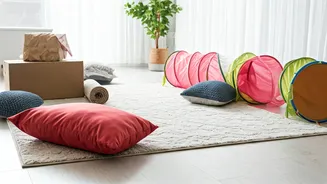
Every great course needs a soft landing. Create a 'crash pad' by piling up all your biggest, softest pillows, cushions, and even a spare duvet at one end of the room. This station is perfect for jumping and crashing, which provides deep pressure input that is highly regulating for the nervous system. You can encourage your child to take a running start (space permitting) and leap into the pile, or to simply fall back into it. It’s an excellent way to start or end the course, offering a safe and satisfying sensory release.
Station 2: The Tunnel Crawl
Create a tunnel by lining up a few dining chairs and draping a large blanket or bedsheet over them. This classic fort-building technique creates a fantastic station for an agility course. Crawling through the dark, enclosed space helps children develop spatial awareness and bilateral coordination (using both sides of the body together). It’s also a great 'heavy work' activity, as they are using their muscles to propel their body forward. If you don't have chairs, you can use a large cardboard box with both ends opened.
Station 3: The Balance Beam
You don't need a wooden beam to work on balance. Use painter's tape to create lines on the floor. A simple straight line is a great start for younger kids. For a bigger challenge, create a zig-zag line or a swirling spiral. Ask your child to walk along the line, heel-to-toe, without stepping off. This simple activity is fantastic for improving balance, focus, and motor control. You can increase the difficulty by having them walk backwards or carry a small object like a beanbag while they do it.
Station 4: Heavy Work Zone
'Heavy work' activities involve pushing, pulling, or carrying heavy objects, and they are exceptionally grounding for kids. Set up a simple task like pushing a laundry basket filled with stuffed animals from one side of the room to the other. Or have them 'rescue' their toy animals by carrying them, one by one, from the start of the course to the crash pad. These tasks engage large muscle groups and provide the organising sensory input that can help a child feel calm and focused.