





The Performer's Dilemma
Ask any actor, voice artist, or even a public speaker about learning a new accent, and they’ll likely mention the feeling of exposure. The initial attempts at a complex dialect—be it a specific regional variation from rural Bengal or a precise upper-class
British accent—are often clumsy. This practice phase is crucial, but doing it in front of a dialect coach or peers can feel like performing a rough draft. It’s expensive in terms of both money and confidence. Every mispronounced vowel or unnatural cadence can feel like a failure, stifling the experimentation that is essential for achieving authenticity. This psychological hurdle often means performers don't practice as much as they should, or they stick to safer, less nuanced versions of the dialect.
What Are AI Voice Frameworks?
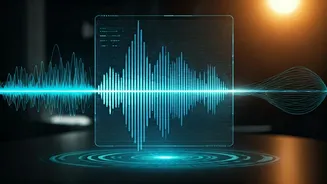
Enter AI voice dialogue frameworks. These aren't the robotic text-to-speech readers of the past. Modern AI voice platforms are sophisticated systems that can analyse, replicate, and manipulate the core components of human speech: pitch, pace, tone, and prosody (the rhythm and intonation). Some platforms use generative AI to create entirely new vocal performances from text, while others specialise in 'voice cloning' or 'voice conversion,' where they can map the characteristics of one voice onto another. For a performer, this means they can hear their own lines spoken in a target dialect, or even 'wear' a dialect like a digital costume to understand its feel and structure from the inside out, creating a private feedback loop that was previously impossible.
A Judgement-Free Rehearsal Room
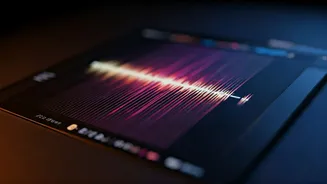
The most significant advantage mentioned in the headline is anonymity. An AI framework is a tireless, non-judgemental partner. You can feed it a line of dialogue and have it generate a version in a flawless Konkani accent, then try to mimic it. You can record your own attempt and have the AI analyse its phonetic and prosodic qualities against a target sample. You can do this a hundred times at 2 a.m. without worrying about frustrating a coach or feeling self-conscious. This privacy fosters fearless repetition. It allows performers to make mistakes, exaggerate, and experiment freely, which is the fastest way to internalise the muscularity and musicality of a new way of speaking. This removes the performance anxiety from the practice itself.
More Than Just an Accent
Mastering a dialect isn't just about pronouncing words correctly; it's about capturing the culture, history, and emotion embedded in its rhythm and melody. Advanced AI frameworks can help performers dissect these nuances. By isolating and manipulating variables like cadence, pitch variation, and vocal fry, an actor can understand *why* a particular dialect sounds the way it does. They can hear how a slight change in pace alters the emotional impact of a sentence. This analytical capability transforms the practice from simple mimicry into a deeper study of character and communication. The AI becomes less of a parrot and more of a vocal microscope, revealing the subtle structures that make a dialect feel authentic and lived-in.
Navigating the Current Landscape
While this technology is revolutionary, it's important to understand its current state. Platforms like ElevenLabs, Resemble AI, and Replica Studios are at the forefront, offering powerful tools for voice generation and modification. However, the quality can vary, especially for hyper-specific or less-documented dialects. The AI is only as good as the data it's trained on. For now, these frameworks are best seen as a powerful supplement, not a complete replacement for human expertise. A skilled dialect coach can provide cultural context, character motivation, and personalised feedback that an algorithm cannot. The ideal workflow combines the tireless, private repetition offered by AI with the nuanced, holistic guidance of a human expert.