



Seeing the Universe's Invisible Light
The light our eyes can perceive is just a tiny fraction of the full electromagnetic spectrum. Beyond the red light we can see lies infrared, a wavelength that we often experience as heat. While invisible to us, the infrared universe is vibrant and full of information.
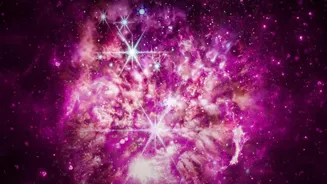
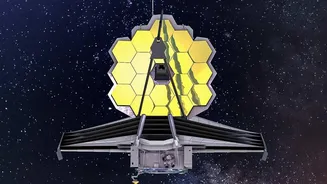
Cooler objects, like planets and the dusty clouds where stars are born, glow brightly in infrared. Telescopes designed to detect this light, like the James Webb Space Telescope (JWST), can see a cosmos that is otherwise hidden from view. This capability is essential because many of the universe's most important processes, especially those related to formation, happen in cooler, darker environments that don't radiate strongly in visible light.
A Cosmic Time Machine
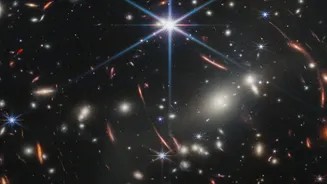
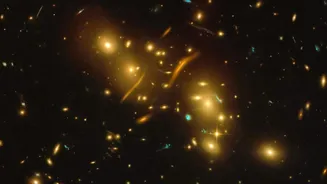
Looking deep into space is the same as looking back in time. This is because light, while incredibly fast, still takes time to travel across the vastness of the universe. The light from the most distant galaxies observed by JWST, for example, traveled for over 13 billion years to reach us. But there's a cosmic complication. Since the Big Bang, the universe has been continuously expanding. As light journeys through this expanding space, its waves get stretched out. Light that was originally emitted as high-energy ultraviolet or visible light from the universe's first stars and galaxies is stretched into longer, lower-energy infrared wavelengths by the time it reaches our telescopes. This phenomenon is called 'cosmological redshift'. Without infrared sensitivity, we simply couldn't detect this ancient light; the earliest galaxies would be completely invisible to us.
Piercing Through Clouds of Cosmic Dust
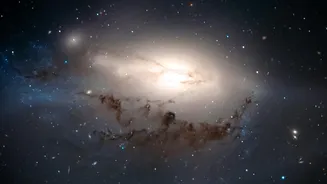
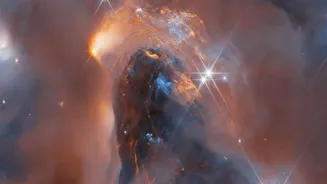
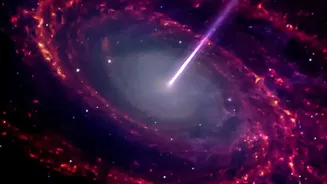
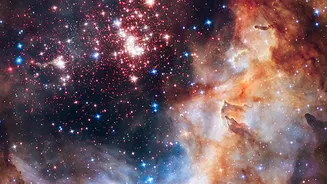
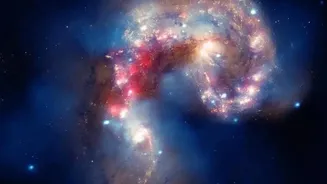
Another major challenge for astronomers is cosmic dust. These are not household dust bunnies, but microscopic particles of carbon and silicates scattered throughout galaxies. These dense clouds act like a cosmic fog, absorbing and scattering visible light. This makes it impossible for optical telescopes to see what’s happening inside stellar nurseries—the regions where new stars and planets are forming—or to get a clear view of the centers of galaxies. Infrared light, however, has a longer wavelength that allows it to pass through these dusty clouds much more easily. This is why infrared telescopes can peer inside these previously obscured regions, revealing newborn stars and the intricate processes of galactic evolution that were once completely hidden from sight. This ability provides crucial context for how stars are born and how galaxies grow.
Challenging the Cosmic Rulebook
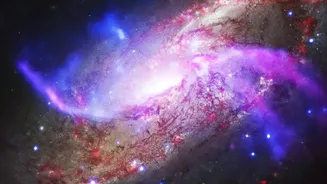
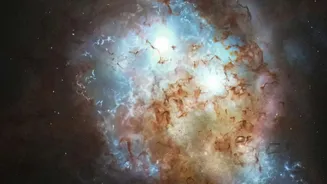
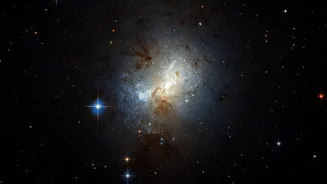
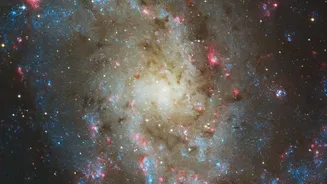
With the unprecedented infrared capabilities of telescopes like JWST, astronomers are already rewriting the story of the early cosmos. Scientists expected to find small, clumpy, and irregular infant galaxies. Instead, they are discovering galaxies from the cosmic dawn that are surprisingly massive, well-structured, and mature. Some early research even identified spiral structures far earlier than models had predicted. These discoveries challenge existing theories about how quickly the first galaxies could have formed and grown after the Big Bang. Furthermore, astronomers are studying mysterious objects dubbed 'little red dots', which are extremely bright, distant objects that could be the precursors to the supermassive black holes found at the center of modern galaxies. By studying these early structures in infrared, scientists can gather real data to refine their models of galaxy evolution.