




A Mission of Multiple Parts
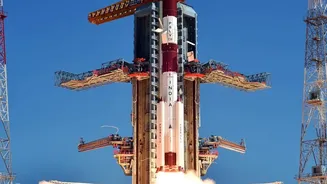
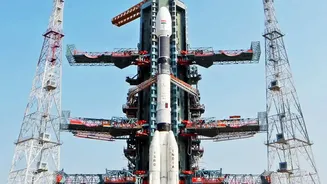
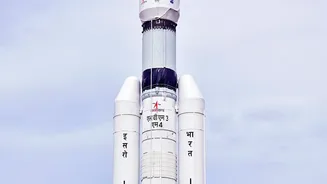
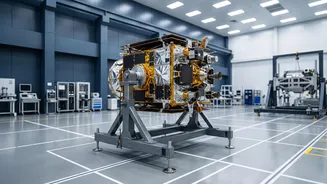
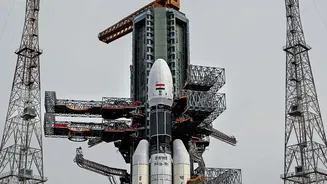
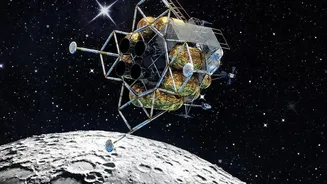
Chandrayaan-4 isn't a single spacecraft, but a complex, five-part system designed for a cosmic relay race. Due to the mission's heavy and complex nature, it will require two separate launches using powerful rockets like the LVM3. These components will then
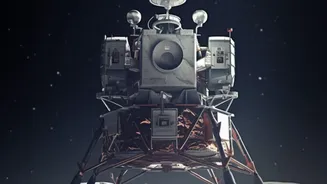
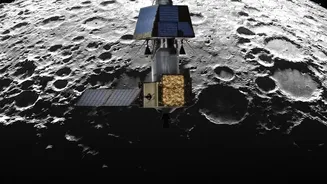
meet and dock in Earth's orbit—a first for an Indian mission—before embarking on their journey to the Moon. This modular architecture is the first step in ensuring a safe return. The five key modules are the Propulsion Module, Descender Module, Ascender Module, Transfer Module, and the crucial Re-entry Module. Each part has a specific job, from getting to the Moon to landing, collecting, and finally, bringing the samples home.
Collecting and Sealing the Treasure
Once the Descender Module achieves a soft landing on the Moon, the critical task of sample collection begins. The lander will be equipped with a robotic arm to scoop surface soil and a drill to collect subsurface material, gathering up to three kilograms of lunar regolith. These samples are invaluable because they are pristine, having never been exposed to Earth's environment. To protect this pristine state, the collected soil and rock will be transferred into specially designed containers within the Ascender Module. These containers will be hermetically sealed, creating an airtight environment to prevent any contamination and preserve the samples in a vacuum state, just as they exist on the Moon.
The Great Escape from the Moon
Getting off the Moon is as challenging as getting there. The Ascender Module acts as a mini-rocket. Using the Descender as a launchpad, it will lift off from the lunar surface to enter lunar orbit. This is a critical manoeuvre that requires precision and power. Once in orbit, it must perform another complex task: docking with the Transfer and Re-entry Modules, which will have been waiting. The sealed sample container is then robotically transferred from the Ascender to the Re-entry Module. This orbital ballet, happening hundreds of thousands of kilometres from Earth, is designed to ensure the precious cargo is securely handed over for the final leg of its journey.
Surviving a Fiery Re-entry
The final challenge is arguably the most perilous: surviving the journey through Earth's atmosphere. The Re-entry Module, carrying the samples, will separate from the Transfer Module and plummet towards Earth at extreme speeds. It is engineered to withstand the immense heat and pressure of atmospheric re-entry. This module acts as a sophisticated heat shield, protecting the delicate lunar materials inside from being altered or destroyed. The design must ensure a controlled, ballistic re-entry to land at a predetermined location on Earth, where recovery teams can secure it quickly. This final step is the culmination of the entire mission's design philosophy—protection and precision from the Moon's surface to the labs on Earth.