





Why the Big Shift to Skills?
Across India, companies are finding that a degree doesn't always guarantee a candidate is ready for the job. [12] The rapid pace of technology, the rise of AI, and new business models mean that job roles are evolving faster than university curriculums.
[21] As a result, employers increasingly face a 'skills gap'—a disconnect between what graduates know and what the industry needs. [14] Recent reports indicate that a significant majority of Indian employers have adopted a skills-first hiring strategy. [8, 22] They're looking for candidates who can contribute from day one, not just those with a strong academic record. [12] This shift is driven by a simple need: companies require people who can solve real problems and adapt to new challenges, capabilities that are demonstrated through skills, not just learned in theory. [10]
The In-Demand Skills of 2026
So, what skills are recruiters looking for? They fall into two main categories: hard skills and soft skills. **Hard Skills:** These are the technical abilities needed for a specific role. Across India, there is massive demand for expertise in areas like Artificial Intelligence (AI) & Machine Learning, data analysis, cybersecurity, cloud computing, and digital marketing. [2, 5] Proficiency in tools like Python, SQL, Tableau, and Google Analytics is highly valued. [2] In fact, AI-related skills have become one of the hardest-to-find talents for Indian employers. [6] **Soft Skills:** These are the personal attributes that determine how you work and interact with others. Employers consistently rank skills like communication, teamwork, adaptability, critical thinking, and problem-solving as just as important as technical know-how. [4, 7, 22] In a world where AI can automate tasks, these uniquely human skills—like empathy and collaboration—are becoming more valuable than ever. [15, 17] A recent LinkedIn Learning report found that 92% of talent professionals consider soft skills equally or more important than technical skills. [20]
Is a Degree Now Worthless?
Not at all. A degree is still a valuable asset. It signals discipline, foundational knowledge, and the ability to complete a long-term commitment. However, its role has changed. Think of your degree as the foundation, not the entire building. [6] It gets your resume looked at, but it’s your skills that will get you hired. [10] Employers are now looking beyond where you studied or what your marks were. [6] The new mindset is clear: a degree might open the door, but it's your demonstrable skills that will secure your place inside and determine how far you advance. [10, 21]
How to Prove Your Skills
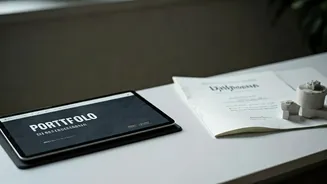
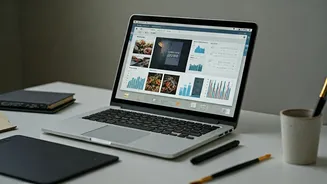
If recruiters want proof, how do you provide it? It's time to go beyond the standard two-page resume. This is where a 'proof of work' portfolio comes in. [15] * **Build a Portfolio:** A portfolio is a curated collection of your best work that showcases your abilities. [23] For a writer, this could be articles. For a developer, it's a GitHub profile with code. For a designer, it’s a Behance or Dribbble page. [13] The goal is to create tangible evidence of your skills. [26] * **Get Certified:** Industry-recognized certifications from platforms like Coursera, Google, or FutureSkills Prime can validate your expertise in specific domains. [10, 16] They show initiative and a commitment to continuous learning. * **Focus on Projects:** Whether it’s through internships, freelance gigs, or even personal passion projects, hands-on experience is the most compelling proof. [25] When you describe a project, focus on the problem you solved and the outcome you achieved. [15] * **Leverage Testimonials:** Ask previous managers, clients, or professors for recommendations or testimonials. These act as social proof and add immense credibility to your profile. [24]